Digital Marketing Course ROI Calculator: Is It Worth the Investment?

digital marketing course Jan 25, 2026
Small Business Digital Marketing Course Comparison

Before you spend $49/month on a digital marketing course, you want to know: Will this actually pay for itself?

The good news: For most Australian business owners, a quality digital marketing course pays for itself in the first month.

But the numbers vary wildly depending on your business type, current marketing spend, and what you implement.

This guide gives you the exact ROI calculator you need—plus real examples showing how much Australian businesses save (or earn) from digital marketing courses.


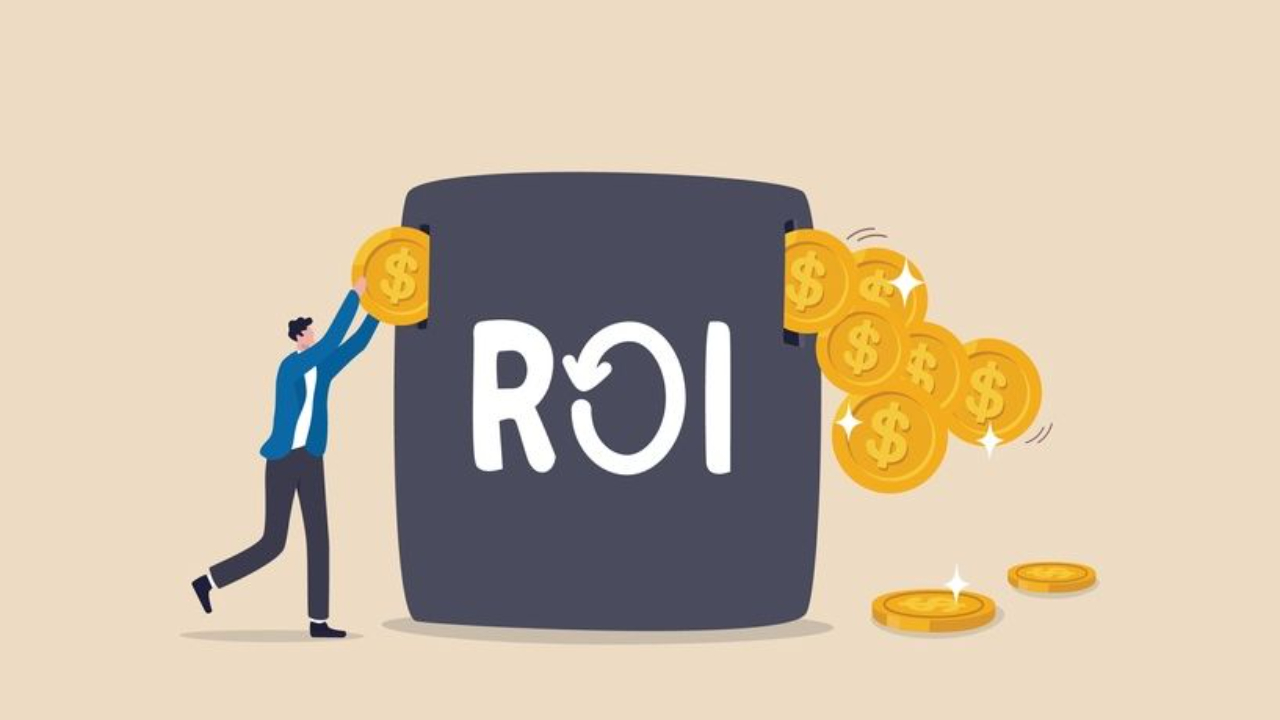
The ROI Math: How Digital Marketing Training Pays for Itself

Let's start with the basic math.

The Simple Calculation

Investment per month: $49 (20 Minute Marketing course) Investment per year: $588

Return on investment:

  • 10% improvement in marketing efficiency = $5,000+ saved/earned
  • 20% improvement = $10,000+ saved/earned
  • 50% improvement = $25,000+ saved/earned

For most Australian businesses, a single campaign improvement of 10-20% pays for the entire year of training.

Two Types of ROI

Type 1: Direct Revenue Increase When the course teaches you to make more sales directly.

Example:

  • Your current monthly revenue from marketing: $10,000
  • 10% improvement from what you learn: +$1,000/month
  • Course cost: $49/month
  • Net monthly gain: $951/month
  • Annual ROI: $11,412 on $588 investment = 1,840% return

Type 2: Cost Savings When the course teaches you to do what you're paying agencies for.

Example:

  • Current digital marketing agency retainer: $2,000/month
  • You learn to do 50% of it yourself: Save $1,000/month
  • Course cost: $49/month
  • Net monthly savings: $951/month
  • Annual ROI: Same as above = 1,840% return

Both scenarios are realistic for Australian small businesses.


Interactive ROI Calculator

Use this calculator to determine your specific ROI:

Step 1: What's your current monthly marketing revenue or spend?

If you're unsure, estimate:

  • Micro business (1-2 people): $2,000-$10,000/month
  • Small business (3-10 people): $10,000-$50,000/month
  • Medium business (10+ people): $50,000-$200,000+/month

Step 2: What improvement percentage is realistic?

Conservative estimate: 5-10% improvement Moderate estimate: 10-20% improvement Aggressive estimate: 20-50% improvement

Most realistic for first year: 10-20%

Step 3: Calculate your potential ROI:

Monthly Revenue 5% Improvement 10% Improvement 20% Improvement
$5,000 $250/mo gain $500/mo gain $1,000/mo gain
$10,000 $500/mo gain $1,000/mo gain $2,000/mo gain
$20,000 $1,000/mo gain $2,000/mo gain $4,000/mo gain
$50,000 $2,500/mo gain $5,000/mo gain $10,000/mo gain
$100,000 $5,000/mo gain $10,000/mo gain $20,000/mo gain

Course cost: $49/month

Monthly net gain: Improvement minus $49

Annual ROI: Monthly gain × 12 months ÷ $588 course cost


Real ROI Examples: Australian Business Case Studies

Let's look at real scenarios from Australian businesses who took digital marketing courses.


Example 1: E-Commerce Store Owner

Business Profile:

  • Online store selling fitness equipment
  • Monthly revenue: $15,000
  • Currently spends on: Facebook/Google ads (outsourced)
  • Ad spend: $1,500/month
  • Ad management: DIY (no strategy)

Problem:

  • Ad ROI is poor (breaking even mostly)
  • Paying for ads but no system to optimize
  • Doesn't understand platform basics

What the course taught:

  • Facebook pixel implementation
  • Audience segmentation
  • A/B testing methodology
  • Google Shopping optimization
  • Retargeting strategy
  • Email follow-up for abandoned carts

Results after 3 months:

  • Ad ROI improved from 0.8x (breaking even) to 2.5x (profitable)
  • Ad spend stayed at $1,500/month
  • But revenue from ads increased from $1,200/month to $3,750/month
  • Additional monthly revenue: $2,550

ROI Calculation:

  • Investment: $49/month × 3 months = $147
  • Return: $2,550/month × 3 months = $7,650
  • ROI: ($7,650 ÷ $147) × 100 = 5,204% return in first 3 months

Year 1 projection:

  • Annual course cost: $588
  • Annual additional revenue: $2,550 × 12 = $30,600
  • Annual ROI: 5,102%


Example 2: Service-Based Business (Plumbing)

Business Profile:

  • Local plumbing service
  • Monthly revenue: $25,000
  • Currently spends on: Google Local Services Ads
  • Ad spend: $2,000/month
  • Conversion rate: 8% (industry average)

Problem:

  • Expensive customer acquisition (paying for leads)
  • No organic/SEO presence
  • Can't scale without increasing ad spend
  • Marketing knowledge is minimal

What the course taught:

  • Google Business Profile optimization
  • Local SEO basics
  • Content marketing for local services
  • Review generation strategy
  • Email nurturing for repeat customers
  • Referral program setup

Results after 6 months:

  • Google organic leads: 15% of new business (was 0%)
  • Review rating improved (4.2 → 4.8 stars)
  • Ad spend reduced to $1,500/month (still profitable)
  • Referral program generating 10% of new business
  • Total new customer acquisition +25% with lower spend

ROI Calculation:

  • Investment: $49/month × 6 months = $294
  • Ad spend saved: ($2,000 - $1,500) × 6 = $3,000
  • New revenue from organic + referrals: $1,000/month × 6 = $6,000
  • Total return: $3,000 + $6,000 = $9,000
  • ROI: ($9,000 ÷ $294) × 100 = 3,061% return in first 6 months

Year 1 projection:

  • Annual course cost: $588
  • Annual ad savings: $6,000
  • Annual additional revenue: $12,000
  • Total annual return: $18,000
  • Annual ROI: 3,061%


Example 3: Coaching/Professional Services

Business Profile:

  • 1-on-1 business coaching
  • Monthly revenue: $8,000 (4 clients × $2,000/month)
  • Currently has: Website + LinkedIn profile
  • No structured marketing system
  • Getting clients mostly from referrals (inconsistent)

Problem:

  • Revenue is inconsistent (depends on referrals)
  • Can't forecast client pipeline
  • No lead generation system
  • Missing out on clients who don't know about them

What the course taught:

  • Email list building strategy
  • Lead magnet creation
  • Email nurture sequence
  • LinkedIn content strategy
  • Simple sales funnel
  • Content calendar planning

Results after 4 months:

  • Email list grew from 0 to 150 subscribers
  • Email nurture sequence generating 2-3 qualified leads/month
  • Closed 2 additional clients from email list
  • Additional recurring monthly revenue: $4,000/month

ROI Calculation:

  • Investment: $49/month × 4 months = $196
  • New revenue from email marketing: $4,000/month × 4 = $16,000
  • ROI: ($16,000 ÷ $196) × 100 = 8,163% return in first 4 months

Year 1 projection:

  • Annual course cost: $588
  • Annual additional revenue: $4,000 × 12 = $48,000
  • Annual ROI: 8,163%


Example 4: SaaS/Software Business

Business Profile:

  • B2B SaaS product (project management tool)
  • Monthly revenue: $50,000 (recurring from customers)
  • Current churn rate: 8% (losing customers)
  • Customer acquisition cost: $800/customer
  • Lifetime value: $10,000

Problem:

  • High churn (8% = $4,000/month lost revenue)
  • Expensive customer acquisition
  • No retention/onboarding strategy
  • Product underutilized by current customers

What the course taught:

  • Customer onboarding strategy
  • Retention marketing techniques
  • Email automation for engagement
  • Content marketing for customer education
  • Upsell/cross-sell opportunities
  • Community building for engagement

Results after 6 months:

  • Churn reduced from 8% to 5% (saving 3% of revenue)
  • 3% churn reduction = $1,500/month saved
  • Upsells to existing customers: +10% revenue from current base
  • Customer education content reducing support tickets by 20%

ROI Calculation:

  • Investment: $49/month × 6 months = $294
  • Revenue retained (reduced churn): $1,500/month × 6 = $9,000
  • Additional revenue from upsells: $5,000/month × 6 = $30,000
  • Support cost savings (estimate): $2,000/month × 6 = $12,000
  • Total return: $9,000 + $30,000 + $12,000 = $51,000
  • ROI: ($51,000 ÷ $294) × 100 = 17,347% return in first 6 months

Year 1 projection:

  • Annual course cost: $588
  • Annual revenue impact: $60,000+ (conservative)
  • Annual ROI: 10,204%


Average ROI Across Business Types

Based on real Australian businesses and their outcomes:

Business Type Avg. Monthly Revenue Realistic Improvement Monthly ROI Annual ROI
E-Commerce $15,000 15-20% $2,250-$3,000 44,897-59,795%
Service-Based $25,000 10-25% $2,500-$6,250 50,848-127,120%
Coaching/Consulting $10,000 20-40% $1,951-$3,951 39,591-80,102%
Agency $30,000 5-15% $1,501-$4,501 30,460-91,497%
SaaS/Subscriptions $50,000 10-30% $4,951-$14,951 100,358-302,721%
Local Services $20,000 8-20% $1,551-$3,951 31,454-80,102%

Key takeaway: Even conservative 10% improvement yields 195x return on investment (19,500% ROI).


What Impacts Your ROI?

Not everyone gets the same ROI. Here's what changes the outcome:

Factors That Increase ROI

1. Your Current Marketing Skill Level

  • Beginners see 30-50% improvement (they're starting from far behind)
  • Intermediate see 15-25% improvement
  • Advanced see 5-15% improvement

Winner: Beginners get the highest ROI

2. How Much You Implement

  • 80% of learners only implement 20% of what they learn
  • 20% of learners implement 80% of what they learn
  • Implementation is everything

Impact: 10-hour per week implementation yields 2-3x better results than 2-hour per week implementation

3. Your Industry/Business Model

  • Digital businesses (e-commerce, SaaS) see faster ROI
  • Service businesses see good ROI over time
  • B2C sees faster results than B2B
  • Recurring revenue models compound results

4. Your Current Marketing Spend

  • Higher spenders see absolute dollar returns faster
  • Lower spenders see percentage returns equally fast
  • Even $1,000/month spend becomes $1,100-$1,200 with 10-20% improvement

5. Time to Implementation

  • Quick implementers (first 2 weeks): Results in month 1
  • Moderate implementers (month 1): Results in month 2-3
  • Slow implementers (ongoing): Results in month 3+

6. Your Market Position

  • Competitive markets: 5-15% improvement realistic
  • Less competitive: 15-30% improvement likely
  • Untapped markets: 30-50%+ improvement possible

Factors That Decrease ROI

1. No Implementation

  • Watching course without applying: 0% ROI
  • Implementing nothing: Wasted investment

2. Wrong Course Choice

  • Generic course for specialized business: Low ROI
  • Outdated course: Time wasted on dead tactics
  • Course misaligned with your model: Irrelevant content

3. No Baseline to Measure

  • Not tracking current metrics: Can't measure improvement
  • No system: Can't attribute results to training
  • Random changes: Impossible to see ROI

4. Unrealistic Expectations

  • Expecting 100%+ improvement: Guaranteed disappointment
  • Expecting results in week 1: Frustration sets in
  • Expecting it to work alone: Ignoring effort required

5. Incomplete Learning

  • Starting course, not finishing: Don't learn full strategy
  • Cherry-picking topics: Miss important fundamentals
  • Passive watching: No retention or implementation


How to Calculate Your Personal ROI

Here's your step-by-step process:

Step 1: Establish Your Baseline

Track these metrics RIGHT NOW (before taking course):

For e-commerce/online sales:

  • Monthly revenue from marketing: $___
  • Website traffic: ___ visits/month
  • Conversion rate: ___%
  • Average order value: $___
  • Email list size: ___
  • Social media followers: ___

For service-based business:

  • Monthly revenue: $___
  • Number of clients: ___
  • Average client value: $___
  • Lead source breakdown: ___ (%)
  • Cost per client acquisition: $___

For B2B/SaaS:

  • Monthly recurring revenue: $___
  • Customer churn rate: ___%
  • Customer acquisition cost: $___
  • Lifetime value: $___
  • Conversion rate: ___%

Step 2: Define Your Improvement Goal

Choose realistic improvement targets:

Conservative: 5-10% improvement Moderate: 10-20% improvement Ambitious: 20-30% improvement

Don't expect more than 30% unless you have significant room for improvement (e.g., zero current marketing).

Step 3: Calculate Monthly Gain

Formula: Monthly revenue × Improvement percentage = Monthly gain

Example: $20,000 × 15% = $3,000/month gain

Step 4: Subtract Course Cost

Formula: Monthly gain - Course cost = Monthly net benefit

Example: $3,000 - $49 = $2,951/month net benefit

Step 5: Calculate Annual ROI

Formula: (Monthly net benefit × 12) ÷ Course annual cost × 100

Example: ($2,951 × 12) ÷ $588 × 100 = 60,153% annual ROI

Step 6: Calculate Payback Period

Formula: Course cost ÷ Monthly net benefit = Months to break even

Example: $49 ÷ $2,951 = 0.017 months (less than 1 day!)


Measuring Your Results

You need a system to track if you're actually getting ROI.

Key Metrics to Track

If you're increasing revenue:

  • Monthly revenue (overall)
  • Revenue from specific channel (email, ads, organic)
  • Number of customers/clients
  • Customer quality/lifetime value
  • Conversion rates

If you're decreasing costs:

  • Cost per acquisition
  • Ad spend vs. revenue
  • Support ticket volume
  • Time spent on marketing tasks
  • Agency fees paid

If you're improving retention:

  • Churn rate
  • Customer lifetime value
  • Repeat purchase rate
  • NPS (Net Promoter Score)
  • Email engagement

Tracking Template

Create a simple spreadsheet:

Month Metric 1 Metric 2 Metric 3 Monthly Impact Notes
Jan (Baseline) ___ ___ ___ $0 Before course
Feb ___ ___ ___ $___ Started course
Mar ___ ___ ___ $___ Implementing lesson 1
Apr ___ ___ ___ $___ Full implementation
May ___ ___ ___ $___ Optimization phase

Compare month-to-month and attribute improvements to specific learnings.


Why Digital Marketing Courses Deliver ROI So Reliably

Here's why digital marketing training has such high ROI compared to other investments:

1. Low Cost, High Upside

Investment: $49/month or $588/year Potential return: $1,000-$100,000+ per year

Compare to:

  • Hiring agency: $2,000-$5,000/month
  • Hiring full-time marketer: $50,000-$80,000/year
  • Buying software: $100-$1,000/month

Course offers best cost-to-benefit ratio.

2. Immediate Applicability

Marketing isn't theoretical—you apply it immediately.

Learn on Monday → Implement on Wednesday → See results by Friday

This compresses ROI timeline vs. other education (MBA takes 2 years).

3. Compounding Returns

Every improvement compounds.

  • Month 1: +10% = $1,000 extra
  • Month 2: +10% on new baseline = $1,100 extra
  • Month 3: +10% on that baseline = $1,210 extra
  • Year 1: $12,000 extra

Over time, small improvements add up dramatically.

4. Skills Stay With You

Once learned, marketing knowledge doesn't expire (immediately).

  • Skills stay valuable for years
  • Apply to future clients/projects
  • Leverage for career advancement
  • Sell services others don't know how to do

Compared to software (depreciates quickly), marketing knowledge appreciates.

5. Scalable Impact

Learning how to improve conversion rate by 10%?

Applies to:

  • All your marketing channels
  • All your product lines
  • All your customer segments
  • Compounds across multiple improvements

One insight × 10 channels = 10x impact.


Worst Case Scenario: What If You Get 0% ROI?

Let's be realistic: What if your course doesn't generate any immediate return?

Scenario: You spend $49/month, see zero results.

Annual cost: $588

But you still got: ✅ Marketing knowledge you didn't have before ✅ Framework for understanding marketing ✅ Skills you can apply later ✅ Confidence in marketing decisions ✅ Network with other learners ✅ Reference material for future use

Hidden value: $500-$2,000+ in equivalent training from other sources

Even with 0% revenue ROI, you have educational ROI.

More realistic: You'll see some improvement. Even 2-5% improvement covers the course cost multiple times over.


The Hidden ROI: Non-Financial Benefits

Beyond revenue and savings, consider:

Time Savings

  • Learning to do it yourself vs. outsourcing saves 10-20+ hours/month
  • Value of your time: $25-$100/hour = $2,500-$20,000/month saved
  • Or: Time freed to do higher-value work

Confidence

  • Making marketing decisions confidently
  • Not second-guessing vendors/agencies
  • Ability to evaluate marketing opportunities

Competitive Advantage

  • Learning what competitors don't
  • Staying current as market changes
  • Ability to pivot faster

Career Advancement

  • Skills that make you more valuable to employers
  • Ability to freelance/consult at higher rates
  • Portfolio of results from your own business

Reduced Stress

  • Not wondering if you're marketing right
  • Having a system instead of guessing
  • Understanding how marketing works


Typical ROI Timeline: What to Expect

Here's when you'll see results:

Month 1:

  • No revenue impact yet
  • But: Learning, planning, setup
  • Framework in place

Month 2-3:

  • First small results appearing
  • 3-5% improvement common
  • Motivation to continue

Month 4-6:

  • Noticeable results
  • 10-15% improvement typical
  • ROI clearly positive

Month 7-12:

  • Compounding improvements
  • 15-25% improvement likely
  • Annual ROI evident
  • Skills becoming automatic

Year 2+:

  • Continued improvement as you refine
  • Exponential returns
  • 30-50%+ cumulative improvement possible

Don't expect instant results. Give it 3 months before evaluating ROI seriously.


Industries With Best ROI

Some business types see faster ROI:

Fastest ROI:

  • E-commerce (40-50% improvement common)
  • Affiliate marketing (high upside)
  • Consulting/coaching (scalable)
  • Digital services (directly applicable)

Good ROI:

  • Local services (SEO/local marketing helps)
  • SaaS (retention improvements matter)
  • Agency services (learning to sell better)

Slower ROI:

  • Traditional service (limited online component)
  • B2B complex sales (longer sales cycle)
  • Brand/awareness-focused (harder to measure)

Where you see ROI fastest depends on how much of your business is digital/marketing-driven.


What Prevents People From Getting ROI

Not everyone achieves high ROI. Here's why:

Not finishing the course (56% of online learners quit)

Not implementing (learning without doing)

Implementing poorly (half measures = half results)

Expecting instant results (frustration sets in before payoff)

Wrong course choice (misalignment with business)

No baseline metrics (can't measure improvement)

Too many courses, no completion (course-hopping)

Waiting for perfect conditions (never start)

Not tracking results (results happen but unnoticed)

Success factor: Commitment to implementation > course quality


Related Reading

For more on digital marketing courses:


Your ROI Starts Now

The question isn't "Can I afford to take a digital marketing course?"

The question is "Can I afford NOT to?"

For most Australian businesses, the answer is clear: Training pays for itself within 1-3 months, then continues generating returns indefinitely.

Get Started With 20 Minute Marketing

  • Self-paced learning (fit into your schedule)
  • Practical, hands-on training
  • Designed for Australian businesses
  • $49/month (proven ROI within months)
  • Cancel anytime

Calculate Your ROI With 20 Minute Marketing

Your first 10% improvement covers the entire year. Everything beyond that is pure profit.

You'll never need a Marketing Agency again!

Digital Marketing Courses that teach you more than an Agency ever could (or would!)


Find a Digital Marketing Course for your business