Digital Marketing Funnel for Small Business: From Traditional Paths to Dynamic Ecosystems

digital marketing course Jan 22, 2026
Small Business Digital Marketing Course Comparison

If you've been doing business for a while, you've probably heard the term "sales funnel."

For decades, businesses used a simple, linear model: Awareness → Interest → Desire → Action (AIDA). Customers entered at the top, you guided them through each stage, and ideally they came out the bottom as paying customers.

It was straightforward. Predictable. And it worked... in 1990.

But here's the problem: Your customers don't follow that straight line anymore.

Today's customer journey looks nothing like a traditional funnel. It's messier. More complex. Less predictable.

And yet, most small business owners are still marketing as if the old linear model still works.

The result? Wasted marketing spend. Missed opportunities. Confused customers. Frustration.

The good news? Once you understand how the modern digital marketing funnel actually works, you can finally align your marketing efforts with how your customers actually behave. You'll be able to meet them where they are, provide value at the right moments, and ultimately drive more sales with less waste.

This guide breaks down everything you need to know about digital marketing funnels for small businesses—how they work, why they're different from traditional funnels, and exactly how to adapt your strategy to win in today's digital landscape.


The Traditional Sales Funnel: Why It's Outdated (But Still Matters)

To understand where we are, we need to briefly look at where we came from.


The AIDA Model: The Old Blueprint

For the past 50+ years, the traditional sales funnel was built around a simple, sequential model called AIDA:

A - Awareness: You run a TV ad, radio spot, or billboard campaign. The goal? Get as many people as possible to know your brand exists.

I - Interest: People who noticed your ad might want to learn more. So you provide a brochure, catalog, or detailed print ad. They become interested.

D - Desire: Through sales presentations, demos, testimonials, and special offers, you convince them they actually want your product.

A - Action: They visit your store, call your sales team, or sign a contract. The sale happens. Success!


Why It Worked (Then)

This linear model was effective because:

  • Limited media channels: People got their information from TV, radio, newspapers, and word-of-mouth. There weren't hundreds of options.
  • Information scarcity: Customers relied on businesses to provide information. They couldn't easily research alternatives.
  • Business control: You controlled the narrative. You decided what information to share and when.
  • Predictable paths: Most customers followed similar journeys because they had limited options.


Why It Doesn't Work (Now)

The traditional funnel breaks down in several critical ways:

Customers have unlimited information: A prospect can research your product, compare you to competitors, read independent reviews, and watch video demonstrations—all before they ever talk to you.

Multiple simultaneous channels: They see a social media ad, search on Google, check reviews on Yelp, visit your website, watch YouTube videos, and compare prices on comparison sites—often all in one day.

Non-linear paths: They might jump straight from Awareness to Decision based on excellent reviews. Or loop back to Consideration ten times before buying. There's no predictable order.

Two-way communication: They expect to interact with you through comments, messages, chat, and posts—not just receive broadcasts.

Post-purchase visibility: Their review on Google or post on social media is now part of your marketing—influencing other potential customers you haven't even met yet.

The old funnel assumed customers were passive. Today's customers are active, empowered, and in control.


Enter the Digital Marketing Funnel: A New Reality

The digital marketing funnel is fundamentally different from its predecessor.

Instead of a simple funnel shape, imagine a dynamic ecosystem—a complex web of interconnected touchpoints where customers enter at various points, move around non-linearly, and interact with your business across multiple channels simultaneously.


What Makes the Digital Funnel Different

1. Non-Linear and Customer-Controlled

Your customer might:

  • See your Instagram post (Awareness)
  • Search Google for your product type (Consideration)
  • Read reviews on Yelp (Consideration again)
  • Leave that site and see your retargeting ad on Facebook (Consideration)
  • Receive a personalized email from you (Consideration/Desire)
  • Search your brand name directly (Decision)
  • Finally convert on your website (Action)

This isn't 1→2→3→4. It's a dance between stages, driven entirely by the customer's needs and timeline.

2. Multiple Simultaneous Touchpoints

Your customer is interacting with you across numerous digital channels at the same time:

  • Your website
  • Search engines (Google, Bing)
  • Social media (Instagram, Facebook, LinkedIn, TikTok)
  • Email
  • Review sites (Google Business Profile, Yelp, Trustpilot)
  • Comparison sites
  • Mobile apps
  • Online forums and communities
  • YouTube and video platforms
  • SMS and messaging apps

They don't follow your preferred path. They navigate their own journey through these channels based on what they need at each moment.

3. Data-Driven and Measurable

Every interaction in the digital funnel generates data. You can see:

  • Where customers find you
  • What content they engage with
  • How long they spend on each page
  • Which channels convert best
  • At what point they drop off
  • What brings them back

This unprecedented visibility lets you optimize in real-time—something traditional marketing never allowed.

4. Relationship and Loyalty-Focused

The digital funnel doesn't end at purchase. In fact, the post-purchase phase is critical:

  • Customer support via email and social media
  • Encouraging reviews and testimonials
  • Building community and engagement
  • Nurturing repeat purchases
  • Turning customers into advocates who share your business with others

A happy customer who leaves a positive review influences dozens of potential customers. A loyal customer who recommends you is worth more than any paid ad.


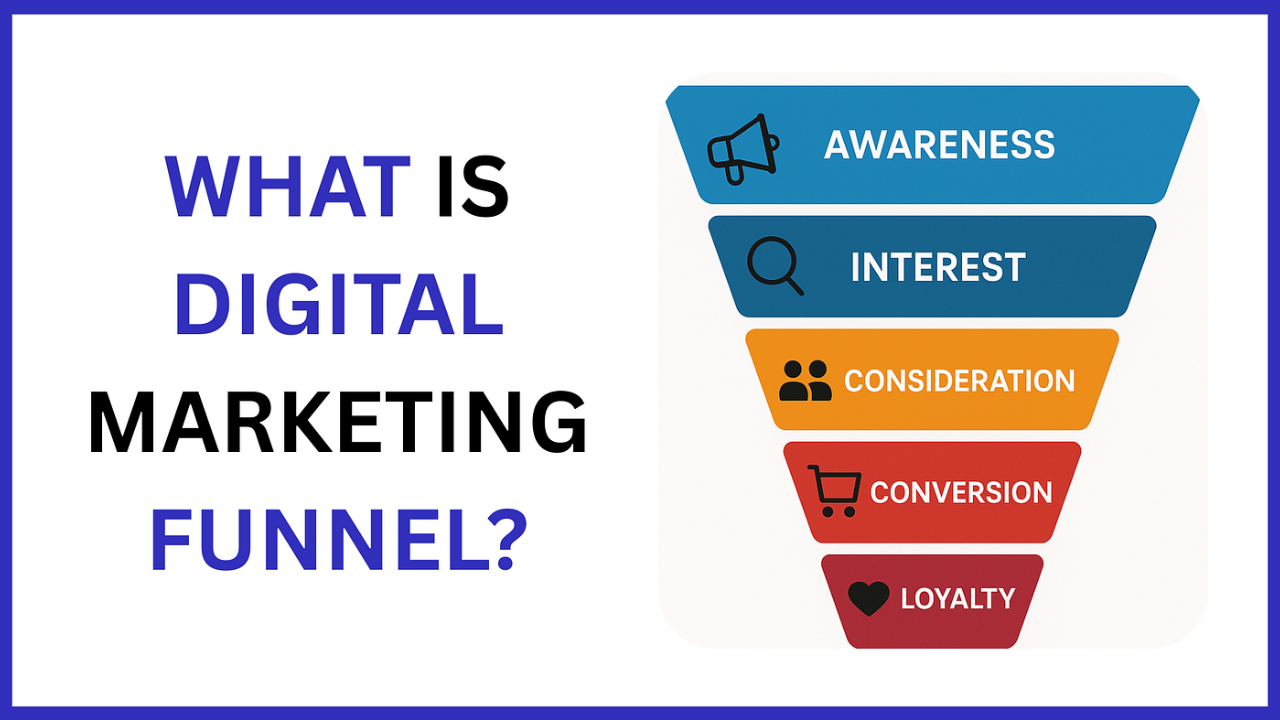
The 5 Stages of the Digital Marketing Funnel for Small Business

Let's walk through how a real customer navigates the modern digital funnel, stage by stage.


Stage 1: Awareness (The Spark)

What's happening: Your potential customer realizes they have a problem or need—and they might be discovering your business for the first time.

How they find you:

  • Social media post from a friend or brand they follow
  • Google search for their problem ("best email marketing software," "digital marketing course for small business")
  • Blog post or article they stumble across
  • Display ad or retargeting ad online
  • Online directory or local search result
  • YouTube video
  • Recommendation in a forum or community

Your goal: Be discoverable and make a positive first impression.

Key digital touchpoints:

  • Social media profiles (Instagram, Facebook, LinkedIn, TikTok)
  • Google Business Profile
  • Your website homepage and core landing pages
  • Blog content
  • YouTube channel
  • Online directories and review sites
  • Paid ads (Google Ads, Facebook/Instagram ads, display ads)

Action: Ensure you're visible where your ideal customer is looking. This means:

  • Optimizing for relevant search terms
  • Creating shareable content on social media
  • Maintaining an up-to-date Google Business Profile
  • Having a professional, fast-loading website
  • Being listed in relevant online directories


Stage 2: Consideration (Exploring Options)

What's happening: Your prospect knows they have a need and is actively researching solutions. This is often the longest stage in the digital journey—and the most multi-channel.

How they behave:

  • Searching for specific solutions ("best digital marketing funnel software," "how to create a sales funnel")
  • Visiting multiple business websites (yours and competitors')
  • Reading online reviews on Google, Yelp, Trustpilot
  • Watching product/service review videos
  • Comparing prices across platforms
  • Asking questions in online communities
  • Subscribing to newsletters for more information
  • Revisiting websites multiple times
  • Checking out competitors

Your goal: Provide valuable information, build credibility, and help them see why you're the best choice.

Key digital touchpoints:

  • Your website (product pages, service pages, about us, case studies, testimonials)
  • Google search results (organic and paid)
  • Google Business Profile and other review sites
  • Blog content (educational, problem-solving articles)
  • Email marketing (newsletters, guides, educational content)
  • Social media (showcasing expertise, sharing testimonials, engaging)
  • Comparison sites
  • Retargeting ads
  • YouTube videos

Action: Create content that answers their questions and builds trust:

  • Comparison guides ("Course A vs. Course B")
  • How-to guides and tutorials
  • Case studies showing real results
  • Detailed product/service pages
  • Testimonials and social proof
  • Educational blog posts
  • Email nurture sequences


Stage 3: Decision (Making the Choice)

What's happening: Your prospect has narrowed down their options and is ready to take action. They're in the final phase of deciding whether to choose you.

How they behave:

  • Revisiting your website (checking pricing, details, guarantees)
  • Looking for discount codes or special offers
  • Reading final reviews or testimonials
  • Asking final questions via website form, chat, email, or social media
  • Checking your credentials, certifications, or social proof
  • Comparing final terms (refund policy, support, etc.)
  • Checking competitor alternatives one final time

Your goal: Remove friction and make the decision-making process easy. Build confidence. Address last-minute doubts.

Key digital touchpoints:

  • Your website (pricing page, checkout page, contact page, FAQ)
  • Google Business Profile (contact information, reviews, photos)
  • Email (limited-time offers, abandoned cart reminders)
  • Website chat or live support
  • Social media direct messages
  • Retargeting ads with special offers
  • Your phone number (if they want to talk before buying)

Action: Make buying effortless:

  • Clear, visible pricing with no surprises
  • Easy checkout process (few clicks, minimal form fields)
  • Clear calls-to-action ("Start Free Trial," "Buy Now," "Schedule Demo")
  • Live chat support for questions
  • Money-back guarantee or strong refund policy
  • Strong reviews and social proof visible at decision points
  • SMS reminders for abandoned carts (e-commerce)


Stage 4: Post-Purchase (The Experience Continues)

What's happening: They've bought from you. But their journey with your business is just beginning—and their experience now directly influences whether they become a loyal customer or a detractor.

How they interact:

  • Receiving order confirmation and shipping updates (email)
  • Using your product/service
  • Accessing support (chat, email, social media, phone)
  • Looking for tutorials, guides, or FAQs
  • Experiencing your customer service
  • Potential issue resolution

Your goal: Ensure they have an excellent experience, provide outstanding support, and set the stage for loyalty.

Key digital touchpoints:

  • Confirmation and transactional emails
  • Your support/help section on your website
  • Email support
  • Social media (customer service interactions)
  • Video tutorials or how-to content
  • Community forum or group
  • SMS updates

Action: Prioritize post-purchase excellence:

  • Send timely confirmation and tracking emails
  • Provide comprehensive how-to guides and FAQs
  • Respond quickly to support requests
  • Follow up to ensure satisfaction
  • Make returns/refunds easy
  • Gather feedback on their experience


Stage 5: Loyalty and Advocacy (Becoming a Fan)

What's happening: The customer is satisfied and becomes a repeat buyer and active promoter of your business. They're leaving reviews, sharing your content, and recommending you to others.

How they behave:

  • Leaving positive reviews online (Google, Yelp, Trustpilot)
  • Sharing your content on social media
  • Engaging with your posts and updates
  • Making repeat purchases
  • Recommending you to friends and family
  • Joining loyalty programs or exclusive communities
  • Attending webinars or events you host

Your goal: Build strong relationships, reward loyalty, and make it easy for them to become your advocates.

Key digital touchpoints:

  • Email marketing (loyalty programs, exclusive offers, special content)
  • Social media (community building, engagement, recognition)
  • Your website (customer login areas, loyalty program, exclusive content)
  • SMS or in-app messages
  • Review sites (where they might leave feedback)
  • Online community or membership area
  • Exclusive events or webinars

Action: Turn customers into advocates:

  • Email campaigns that provide ongoing value
  • Exclusive discounts or early access for loyal customers
  • Recognition of customer stories and testimonials
  • Loyalty programs or rewards
  • Community building (online groups, forums)
  • Regular engagement on social media
  • Asking for and responding to reviews
  • Creating referral programs


Why the Digital Funnel Matters for Small Business

At this point, you might be thinking: "This is interesting, but why does it actually matter for my business?"

Great question. Here's why understanding the digital marketing funnel is crucial:

#1: You Can Compete With Bigger Players

Traditional marketing favored businesses with big budgets for TV, radio, and print. The digital funnel rewards businesses that are smart, strategic, and customer-focused.

By understanding where your customer is in their journey and providing exactly what they need at that moment—even with a small budget—you can attract qualified prospects and convert them to customers.

Example: A local plumbing company can't compete with national chains on TV ads. But by showing up in Google search results when someone searches "emergency plumber near me," optimizing their Google Business Profile with reviews, and responding quickly to messages, they can win local business that bigger companies miss.

#2: You Know What's Actually Working

One of the biggest advantages of the digital funnel is measurability. You can see:

  • Where your customers find you
  • Which channels drive the most qualified leads
  • What content resonates
  • Where customers drop off
  • Which efforts actually lead to sales

This means you can stop guessing and wasting money on activities that don't work. You can double down on what does.

Example: You might discover that your Instagram posts drive awareness but don't convert. Your email marketing drives conversions. Your Google Business Profile reviews are crucial for decision-stage customers. Armed with this insight, you optimize your spending accordingly.

#3: You Can Serve Customers Better

When you understand the customer's non-linear, multi-channel journey, you can meet them where they are with what they need.

Instead of forcing them down a single path, you're providing value at each stage:

  • Helpful content at Awareness
  • Detailed information at Consideration
  • Easy purchasing at Decision
  • Great support at Post-Purchase
  • Community at Loyalty

This better service builds trust, reduces friction, and naturally leads to more sales.

#4: You Stop Leaving Money on the Table

Many small businesses focus only on the initial sale. Once a customer buys, they move on to the next prospect.

But in the digital funnel, loyal customers and advocates are incredibly valuable:

  • They make repeat purchases (higher customer lifetime value)
  • They leave positive reviews (influencing dozens of other prospects)
  • They refer friends and family (lowest cost customer acquisition)
  • They become partners in your marketing (through social shares, testimonials, etc.)

By nurturing the post-purchase relationship, you're not just selling once—you're building a sustainable business with multiple revenue streams from each customer.

#5: You Adapt Faster to Change

The digital landscape is constantly evolving. New platforms emerge. Algorithms change. Customer behaviors shift.

By understanding the core principles of the digital funnel (customer control, multi-channel, data-driven), you're equipped to adapt to whatever comes next. You're not dependent on a specific platform or tactic. You're focused on fundamental customer behaviors.


Key Differences: Traditional vs. Digital Funnels at a Glance

Let's put these side-by-side so the differences are crystal clear:

Aspect Traditional Funnel Digital Funnel
Structure Linear, sequential stages Non-linear, dynamic, interconnected
Customer Control Business-controlled path Customer-controlled journey
Channels TV, radio, print, phone, in-person Website, search, social, email, apps, reviews, more
Communication One-way broadcast Two-way dialogue and interaction
Measurement Delayed, difficult, imprecise Real-time, detailed, precise
Focus Single purchase transaction Relationship and lifetime value
Personalization Broad demographics Individual behavior and preferences
Data Used Limited, gathered slowly Extensive, gathered continuously
Post-Purchase Minimal emphasis Critical for loyalty and advocacy


How to Adapt Your Small Business Strategy for the Digital Funnel

Okay, you understand the digital funnel. Now what? How do you actually adapt your marketing to leverage it?


Step 1: Understand Your Ideal Customer's Digital Journey

Start by mapping out how your ideal customer might move through the digital funnel:

Awareness stage: Where do they find you? (Google? Instagram? Facebook? YouTube? Referral?)

Consideration stage: Where do they research? (Your website? Competitors' sites? Review sites? Forums? YouTube reviews?)

Decision stage: Where do they compare final options and make the decision? (Your pricing page? Reviews? Competitor comparison? Chat support?)

Post-purchase: How do they interact with you after buying? (Email support? Social media? Reviews? Community?)

Advocacy: How might they become a fan and tell others? (Reviews? Social sharing? Email referral? Word-of-mouth?)

Don't guess. If possible, ask your existing customers how they found you and what their journey looked like.


Step 2: Ensure You're Present at Key Touchpoints

Once you understand the journey, make sure you're visible and accessible at each critical stage.

You don't need to be everywhere. Focus on the 3-5 most important channels for your business:

Example for a digital marketing course:

  • Google search (Awareness & Consideration)
  • Blog content (Awareness & Consideration)
  • Email marketing (Consideration & Decision)
  • Your website (all stages)
  • YouTube (Awareness & Consideration)
  • Social media (Awareness)
  • Online reviews (Decision)

Make sure each of these touchpoints is professional, up-to-date, and serves the customer's needs at that stage.


Step 3: Provide Value at Every Stage

The old approach was to sell, sell, sell. The digital approach is to help, help, help.

Awareness stage content:

  • "How to create a sales funnel" (problem-focused)
  • "5 mistakes small businesses make with marketing" (educational)
  • Social media tips and insights

Consideration stage content:

  • Detailed guides and tutorials
  • Comparisons ("Course A vs. Course B")
  • Case studies showing real results
  • Testimonials and reviews
  • Free trials or samples

Decision stage content:

  • Clear pricing and terms
  • Refund guarantees
  • Easy calls to action
  • Live chat support
  • FAQ addressing common concerns

Post-purchase & loyalty content:

  • Welcome email sequence
  • Tutorials and how-to guides
  • Community and engagement opportunities
  • Loyalty rewards or exclusive access
  • Celebration of customer successes


Step 4: Integrate Your Digital Channels

Your website, social media, email, blog, and other channels shouldn't work in isolation. They should work together.

Consistent branding: Same colors, fonts, voice, and values everywhere.

Clear pathways: Links between channels make sense. Social media links to your website. Blog posts include email signup. Website promotes your community.

Connected experience: If someone follows you on Instagram, visits your website, and gets your email, it all feels like one cohesive experience.

Unified messaging: Your core message is consistent even though you're reaching people on different platforms.


Step 5: Use Data to Optimize

This is where the digital funnel shines. You have data. Use it.

Key metrics to track:

  • Website analytics: Where do people come from? What pages do they visit? Where do they drop off?
  • Conversion rates: What percentage of people complete a desired action on each page?
  • Channel performance: Which channels drive the most valuable customers?
  • Email metrics: Open rates, click-through rates, conversion rates
  • Social media insights: Which posts get engagement? Who are your followers?
  • Reviews and reputation: What are people saying about you online?

Use this data to identify problems and opportunities:

"I see that 40% of people leave our pricing page without scrolling. Maybe the pricing isn't clear or the value isn't communicated well. Let me test a redesign."

"Email drives twice the conversion rate of social media. Let me shift more budget to email."

"Our Google reviews are excellent, but few people are leaving them. Let me create a simple process to ask satisfied customers for reviews."


Step 6: Prioritize Post-Purchase Relationships

Don't abandon customers after they buy. The post-purchase phase is where loyalty is built and advocates are created.

  • Send thank you emails
  • Provide exceptional support
  • Ask for feedback and reviews
  • Share exclusive content or offers
  • Celebrate their wins
  • Build community

A customer who feels valued becomes a customer who tells others about you.


Step 7: Stay Agile and Adapt

The digital landscape changes constantly. New platforms emerge. Algorithms shift. Customer behaviors evolve.

Stay informed. Test new channels. Adjust based on results. The businesses that win are those that can adapt quickly while staying focused on core principles (customer needs, multi-channel presence, data-driven decisions).


Real-World Examples: The Digital Funnel in Action

Let's look at how different types of businesses apply the digital funnel:


Example 1: E-Commerce Store

Awareness: Customer sees an Instagram ad for a product they've been thinking about.

Consideration: They visit the website, browse related products, read reviews on the product page, check the return policy, and compare with competitors online.

Decision: They see a limited-time discount on Facebook (retargeting), click it, add the product to cart, and use an abandoned-cart email reminder to complete the purchase.

Post-purchase: They receive order confirmation and shipping updates via email. After delivery, they get a follow-up asking for a review. They leave a positive review. Three months later, they get a "We miss you" email with a discount on a repeat purchase.

Loyalty: They become a repeat customer, share products on social media, and refer friends for a referral discount.

Digital touchpoints used: Instagram, website, email, Facebook retargeting, review sites, SMS, referral program.


Example 2: Service-Based Business (Plumbing)

Awareness: Someone's toilet breaks at 10 PM and they Google "emergency plumber near me."

Consideration: They see the Google Business Profile result with 4.9-star reviews, click it, see your service areas, availability, and pricing.

Decision: They call the number from Google Business Profile (trackable), speak to you briefly, confirm you can come out tonight, and book the appointment.

Post-purchase: You send a follow-up text confirming the appointment, arrive on time, do excellent work, and send a follow-up email asking them to leave a review. They leave a 5-star review.

Loyalty: Six months later, they have another plumbing issue and call you directly (no need to search). They also mention you to a friend who has a plumbing problem.

Digital touchpoints used: Google search, Google Business Profile, phone (trackable), text/SMS, email, review sites, referral (word-of-mouth online).


Example 3: Digital Marketing Course

Awareness: Someone reads a blog post titled "Digital Marketing Funnel for Small Business" (maybe this one!).

Consideration: They explore your website, read testimonials and course reviews, watch a free intro video, compare your course with competitors.

Decision: They see a limited-time launch offer in an email, check the detailed course page, read final reviews, and click "Enroll Now."

Post-purchase: They receive a welcome email, access course materials immediately, engage with the community, and eventually complete the course.

Loyalty: They leave a positive course review, share their results with their email list, and refer other business owners to your course.

Digital touchpoints used: Blog content, website, email, YouTube, comparison sites, community, course platform, reviews.


Common Digital Funnel Mistakes Small Businesses Make

As you begin adapting to the digital funnel, watch out for these common pitfalls:

Mistake #1: Ignoring Mobile Users

More than 60% of searches are on mobile. If your website, emails, and ads don't work great on mobile, you're losing customers.

Fix: Ensure your website is mobile-responsive. Test emails on mobile. Create mobile-friendly ads.

Mistake #2: Disappearing After the Sale

Many businesses focus obsessively on getting the customer but ignore them after purchase.

Fix: Invest in post-purchase experience and loyalty. It's more profitable than constant new customer acquisition.

Mistake #3: Not Using Data

If you don't know where your customers come from or which channels convert best, you're marketing blind.

Fix: Set up basic analytics on your website. Track which channels drive customers. Monitor conversion rates. Use this data to optimize.

Mistake #4: Being Everywhere at Once

Trying to master every platform (TikTok, Instagram, Facebook, LinkedIn, YouTube, Twitter, Pinterest...) is a recipe for burnout.

Fix: Focus on the 3-5 channels where your ideal customer actually is. Master those. Expand later.

Mistake #5: Treating Every Customer the Same

The digital funnel allows for personalization. A customer in the Awareness stage needs different content than one in the Decision stage.

Fix: Segment your audience. Personalize your messages based on where they are in the journey. Use data to tailor experiences.

Mistake #6: Neglecting Reviews and Reputation

Online reviews are now part of your marketing. They influence people in the Decision stage.

Fix: Monitor your reviews across platforms. Ask satisfied customers to leave reviews. Respond to negative reviews professionally.

Mistake #7: Inconsistent Communication

If your website says one thing, your social media says another, and your email says a third, customers get confused.

Fix: Ensure consistent messaging, branding, and values across all touchpoints. Make your brand immediately recognizable.


Getting Started: Your Digital Funnel Action Plan

Ready to apply the digital funnel to your small business? Here's a simple action plan:

Week 1: Map Your Customer Journey

  1. Write down your ideal customer's profile (demographics, challenges, goals)
  2. Map out how they might find you and move through the 5 stages
  3. Identify the key digital touchpoints for your business
  4. Note where you're currently weak

Week 2: Audit Your Current Presence

  1. Visit your website from a customer's perspective. Is it clear? Professional? Easy to navigate?
  2. Check your social media profiles. Are they complete and professional?
  3. Google yourself. What comes up? Are your listings accurate?
  4. Check reviews about your business on Google, Yelp, and industry sites.
  5. Ask: "If I were a prospect, would I trust this business?"

Week 3: Create a Content Strategy

  1. Identify content needs for each stage (Awareness, Consideration, Decision, Post-purchase, Loyalty)
  2. Plan 4-6 pieces of content that address customer needs at each stage
  3. Decide which channels to prioritize (website, email, social, etc.)

Week 4: Start Building

  1. Implement one quick win (e.g., improve your Google Business Profile, create one valuable blog post, set up email capture)
  2. Set up basic analytics to start tracking what's working
  3. Schedule a weekly review to check progress and adjust


Learn More: Deepen Your Digital Marketing Knowledge

Understanding the digital marketing funnel is foundational—but it's just one piece of successful digital marketing for your small business.

To truly master how to attract customers, convert them, and build loyal advocates through digital channels, you'll want to go deeper:

Explore Related Topics:

These resources will help you go from understanding the digital funnel to actually implementing it effectively in your business.


Take Your Digital Marketing to the Next Level

Understanding the digital marketing funnel is powerful. But knowledge without implementation is just theory.

The businesses that win are those that:

✅ Understand their customer's journey

✅ Show up at the right moments with the right message

✅ Provide genuine value at every stage

✅ Use data to continuously improve

✅ Build lasting customer relationships

✅ Create advocates who promote their business

This is what separates thriving small businesses from struggling ones.

If you're ready to take this knowledge and actually implement it—to understand exactly how to attract the right customers, convert them, and build a loyal community—the next step is structured, actionable training.

Get Started With 20 Minute Marketing

Our comprehensive digital marketing course walks you through:

  • The complete digital marketing funnel and how to apply it to your business
  • Specific strategies for each stage of the customer journey
  • How to set up and optimize each digital channel
  • How to measure what's working and optimize for better results
  • Real case studies and examples from Australian small businesses
  • Practical implementation guides you can start using immediately

Key Benefits:

✅ Self-paced, 20-minute lessons (fits your busy schedule)

✅ Practical, hands-on training (not just theory)

✅ Australian-focused context and compliance

✅ Active community of small business owners

✅ Direct support when you get stuck

✅ Just $49/month (ROI positive within weeks for most small businesses)

Whether you're just starting to understand digital marketing or you're looking to take your current efforts to the next level, a structured course will accelerate your learning and results.

Start Your Digital Marketing Journey Today

The digital marketing funnel is how modern customers buy. Master it, and you'll unlock sustainable growth for your small business.


Final Thoughts: The Modern Path to Business Growth

The sales funnel hasn't disappeared. The linear, business-controlled path of the traditional AIDA model has just evolved.

Today's funnel is more complex, more dynamic, more customer-controlled. But it's also more trackable, more optimizable, and more rewarding for businesses that understand it.

Your customers are already navigating this digital funnel. The question is: Are you present and helpful at each stage? Or are you still marketing as if it's 1990?

The businesses that win are those that adapt. Those that meet their customers where they are. Those that provide genuine value at every touchpoint. Those that use data to improve constantly.

That's the future of small business marketing. And now that you understand the digital funnel, you're ready to build it.

You'll never need a Marketing Agency again!

Digital Marketing Courses that teach you more than an Agency ever could (or would!)


Find a Digital Marketing Course for your business