
The Five Pillars of Digital Marketing Every Australian Small Business Needs in 2026
Mar 01, 2026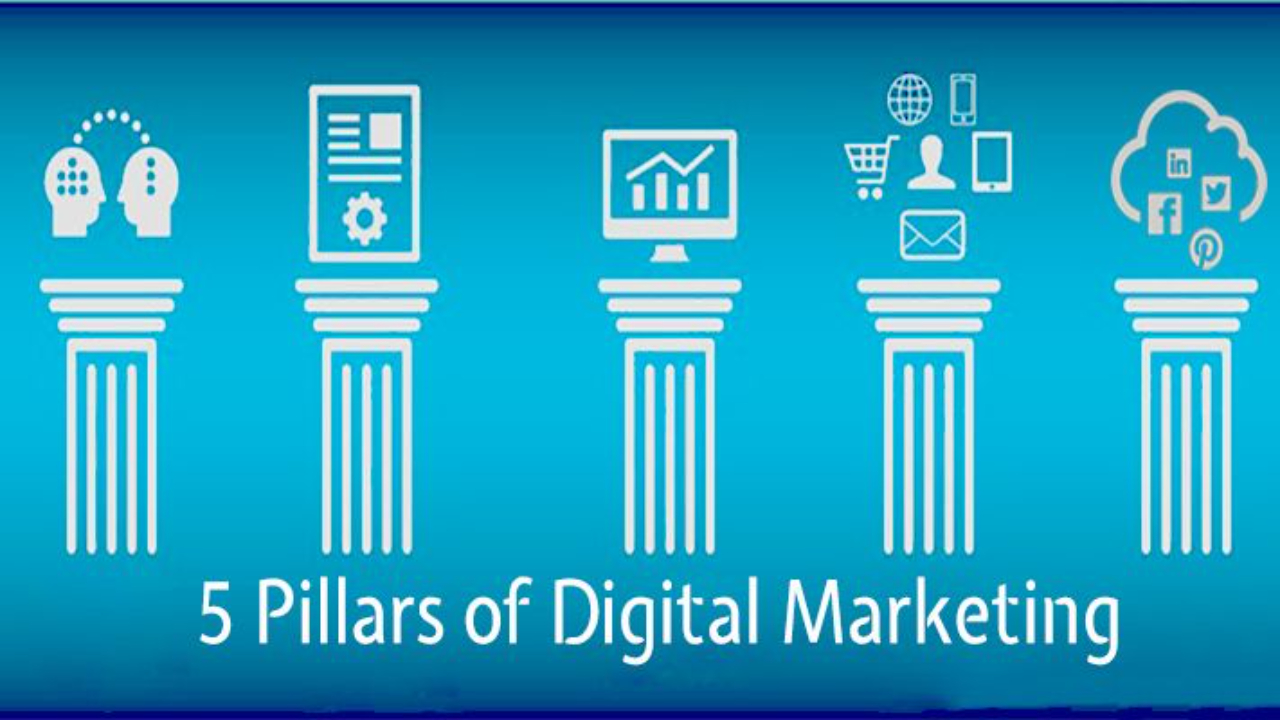
Last updated: April 2026 · Written by 20 Minute Marketing · 9 min read
Most small business owners approach digital marketing the same way a tourist approaches a foreign city without a map — wandering from one thing to the next, spending money on what looks promising, wondering why they never seem to get anywhere. A month on Instagram. Some Google Ads. A website redesign. A flurry of blog posts that stops after six weeks. Sound familiar?
The reason this pattern is so common is not laziness or lack of effort. It is the absence of a framework. Without understanding how the different elements of digital marketing connect and support each other, every tactic feels like a separate gamble. The businesses that grow consistently online are not the ones doing the most things — they are the ones doing the right things in the right order, systematically.
This is the purpose of the Five Pillars framework. It is the conceptual backbone of everything we teach at 20 Minute Marketing, and it is the clearest map we know of for building a digital marketing system that works even when you are not actively working on it.
Pillar 1: Strategy — Know Before You Spend
📘 Want the full picture? Read our Australian small business marketing courses — the complete pillar guide this article is part of.
Every wasted marketing dollar can be traced back to a missing strategy. Strategy is not a business plan or a mission statement. It is a clear answer to three questions: Who are you trying to reach? What do you want them to do? How will you measure success?
The most important work in this pillar is understanding your customer deeply. This means building detailed buyer personas — documented profiles of your ideal customer that go beyond demographics to capture their goals, fears, search behaviours, and decision triggers. A café owner trying to attract young professionals in inner Melbourne has a completely different customer profile to a tradie trying to win commercial contracts in outer Brisbane. The marketing tactics that work for one will not work for the other.
Strategy also includes competitor research. Before you spend on ads or content, you need to know what you are competing against — what your competitors are ranking for, where they are spending, and where the gaps are that you can exploit. According to SEMrush's Competitor Analysis Guide, businesses that conduct regular competitive analysis grow their organic traffic 2x faster than those that don't.
Without Pillar 1, every other investment is a guess.
Pillar 2: Visibility — Get Found Where It Matters
Visibility is the foundation of everything that follows. It does not matter how good your product is, how compelling your website is, or how sophisticated your email sequences are — if people cannot find you when they are looking, none of it matters.
Visibility in 2026 has three components working together:
- Search Engine Optimisation (SEO): Ensuring your website ranks for the terms your customers are searching. This starts with technical fundamentals — site structure, page titles, internal linking — and builds to content authority over time.
- Google Business Profile: For any business with a local component, your Google Business Profile is often the first thing a potential customer sees. A neglected or incomplete profile is invisible; a well-managed one generates calls and visits every day without additional spend.
- Answer Engine Optimisation (AEO): As AI-powered search tools like Google's SGE and ChatGPT become the first port of call for many queries, ensuring your content is structured to be cited by these tools is an emerging but critical element of visibility. Google's AI search updates have made this an urgent priority for small businesses who want to stay visible in the next era of search.
Visibility is a long-term investment with compounding returns. The businesses that dominate local search today started building their visibility two years ago. The best time to start is now.
Pillar 3: Content — Demonstrate Authority at Scale
Content is how you demonstrate that you are worth trusting before a potential customer has ever spoken to you. In every industry, the businesses that publish consistent, useful, specific content attract better-quality leads who arrive pre-convinced rather than needing to be sold to.
Content is not just blog posts. It encompasses every piece of information your business puts into the world: your website copy, your social media posts, your YouTube videos, your email newsletters, your Google Business Profile updates. All of it contributes to a customer's perception of your expertise and reliability.
The most important principle in content is matching your content to search intent. A person searching "how to unblock a drain" is looking for information. A person searching "emergency plumber Sydney" is ready to hire. Creating content for both audiences at different stages of the journey is what builds a pipeline rather than a single transaction. Moz's guide to search intent remains one of the clearest explanations of why this matters and how to do it well.
For small business owners worried about time, the solution is not to produce less — it is to produce smarter. A single 20-minute video interview with yourself can become a blog post, three social media posts, an email newsletter, and a FAQ answer for your website. The Voice-to-Content method is one of the fastest ways to generate a month's worth of content in a single afternoon.
Pillar 4: Relationships — Build an Audience You Own
Social media followers, Google rankings, and ad placements all have one thing in common: they can be taken from you overnight by a platform algorithm change, a policy update, or a competitor outbidding you. An email list cannot be taken from you. An SMS list cannot be taken from you. This is why Pillar 4 — building direct relationships with your audience — is the most durable investment in the entire framework.
Email marketing consistently delivers the highest ROI of any digital channel. Campaign Monitor's Email Marketing Benchmarks report an average return of $42 for every $1 spent on email. For Australian small businesses, which often operate on tight margins and seasonal revenue cycles, a well-managed email list is both an insurance policy and a growth engine.
The relationship pillar includes:
- Email list building through lead magnets, website opt-ins, and post-purchase sequences.
- Email automation — welcome sequences, nurture journeys, and re-engagement campaigns that run without manual effort.
- SMS marketing for time-sensitive offers and appointment reminders, where open rates consistently exceed 95%.
- Online reviews as a form of relationship asset — a business with 50 recent five-star reviews has a trust infrastructure that no ad budget can replicate quickly.
The marketing hourglass model — which extends the traditional funnel to include the post-purchase experience — is the framework we use to think about relationship building holistically. You can read more about it in our Marketing Hourglass guide.
Pillar 5: Paid Amplification — Accelerate What Already Works
Paid advertising — Google Ads, Meta Ads, YouTube ads — is the accelerator, not the engine. This distinction is critical. Businesses that try to use paid ads as a substitute for the first four pillars burn through budget quickly and conclude that "ads don't work." The businesses that use paid advertising to amplify an already-functioning organic presence see compounding returns.
The correct order is: get your strategy clear, build your visibility foundations, create content that converts, build your email list — then use paid ads to drive more of the right people into that system faster. A Google Ad that sends traffic to a poorly optimised landing page with no follow-up sequence is an expensive way to lose money. The same ad sending traffic to a high-converting page connected to an automated email nurture sequence is a lead machine.
For most Australian small businesses in 2026, the three most valuable paid channels are:
- Google Search Ads: For capturing high-intent demand that already exists — people who are searching for what you sell right now.
- Google Maps / Promoted Pins: For local businesses wanting visibility in their service area without heavy keyword competition.
- Meta Ads (Facebook and Instagram): For building awareness, retargeting website visitors, and generating leads in categories where people are not yet actively searching.
How the Five Pillars Work Together
The power of this framework is not in any single pillar — it is in their interaction. Strategy informs every other decision. Visibility brings people into the system. Content converts curiosity into trust. Relationships turn one-time customers into repeat ones. Paid amplification speeds the whole process up.
Remove any one pillar and the system weakens. Run paid ads without a content strategy and you pay full price for every lead, forever. Build an email list without visibility and you will never grow it past the people who already know you. Create great content without a distribution strategy and it sits unread.
Most small businesses are strong in one or two pillars and weak in the others. The goal is not perfection across all five — it is sufficient competence in each to allow the system to function. Once it does, it runs with far less effort than the scattered, tactic-by-tactic approach most business owners are trapped in.
The businesses that win online in 2026 are not the ones doing the most things. They are the ones doing the right things in sequence, consistently, with a clear framework connecting every decision.
Where to Start: The 20-Minute Audit
If you want to apply this framework to your own business right now, spend 20 minutes doing a pillar-by-pillar audit:
- Strategy: Do you have documented buyer personas? Do you know your top three competitors and what they rank for?
- Visibility: Is your Google Business Profile complete and active? Do you rank on page one for your primary service + suburb combination?
- Content: Do you have at least one piece of published content addressing each major question your customers ask before buying?
- Relationships: Do you have an active email list with at least one automated welcome sequence? Do you have a system for requesting reviews?
- Paid Amplification: If you are running paid ads, are they sending traffic to dedicated landing pages with conversion tracking in place?
Every "no" in that list is a gap. Every gap is an opportunity. Fixing them in order — strategy first, then visibility, then content, then relationships, then paid amplification — is the clearest path to a digital marketing system that generates consistent, high-quality leads without requiring you to be constantly on call to feed it.
Learn All Five Pillars — One Lesson at a Time
Our Digital Marketing Deluxe Course takes you through all 100 lessons across every pillar of digital marketing — built specifically for Australian small business owners. Each lesson takes 20 minutes. Each one builds on the last. By the end, you have a complete, functioning marketing system that you own and understand.
No agency fees. No guesswork. Just a clear, proven system for growing your business online.
Start the Deluxe Course →Get the complete digital marketing system built for Australian small business.
Check Out Essentials →Ready for the complete system? join the Small Business Marketing Course.
The course Australian small businesses choose.
20 Minute Marketing is built specifically for Australian small business owners — local context, local case studies, and a system that fits a busy day.
Built for time-poor Australian small business owners.
Learn digital marketing in 20 minutes a day
Self-paced courses from someone who runs digital for two national brands. Build skills you can show an employer or a client.