
Email A/B Testing for Small Business: How to Double Your Open Rates With Simple Split Tests
Jan 09, 2026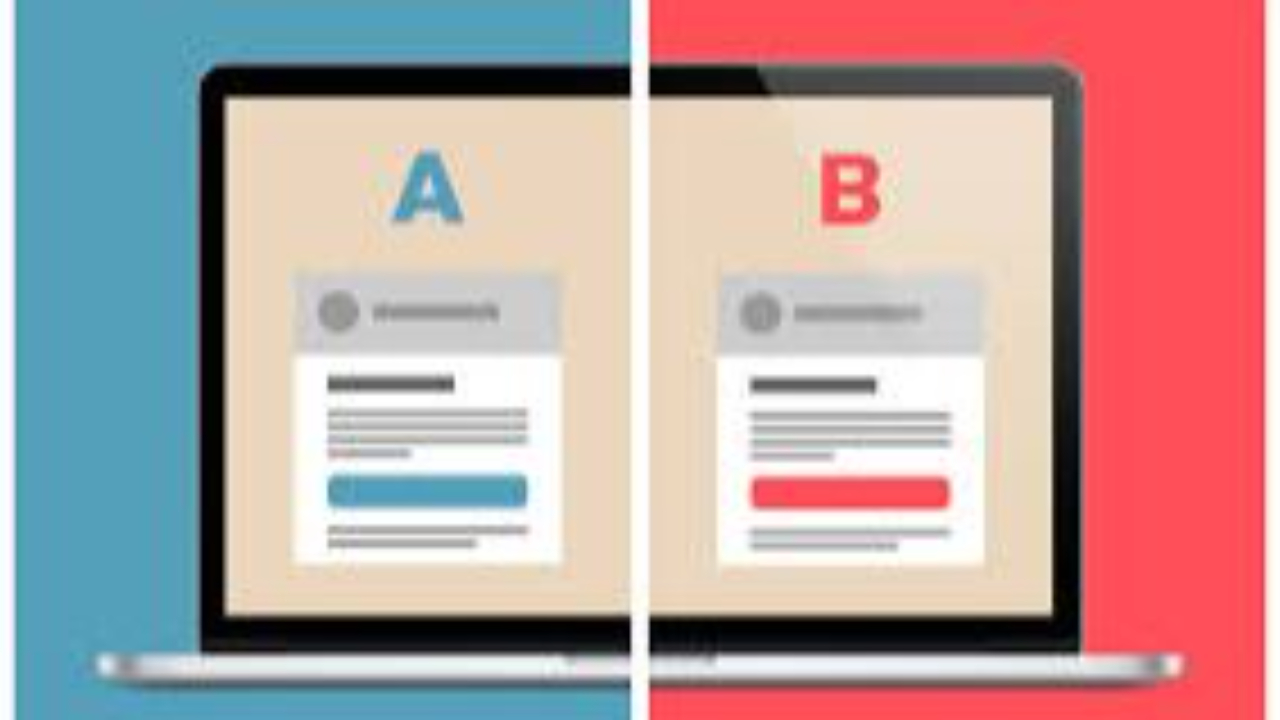
Last updated: April 2026 · Written by 20 Minute Marketing · 9 min read
You spend twenty minutes writing an email to your subscribers. You agonise over the subject line, tweak the wording, and hit send. The next morning you check your stats: 18% open rate, 1.2% click rate. Was the subject line wrong? Was the content off? Was it the send time? You have no idea, because you only sent one version — so you have nothing to compare it to.
A/B testing, also called split testing, solves this problem. It means sending two slightly different versions of the same email to small portions of your list, measuring which one performs better, and then sending the winning version to everyone else. It is the single most reliable way to improve your email marketing performance over time, and it requires no technical skill, no extra budget, and no marketing degree.
For small business owners who rely on email to drive bookings, sales, and repeat customers, A/B testing is not an optional advanced tactic. It is how you stop guessing and start knowing what your audience actually responds to.
Why A/B Testing Works Especially Well for Small Business
📘 Want the full picture? Read our our email marketing playbook — the complete pillar guide this article is part of.
Big companies run A/B tests across massive lists, testing tiny variables that produce marginal gains. For a small business, the gains are anything but marginal. When your list is between 500 and 5,000 subscribers, a single improvement — like finding a subject line format that lifts your open rate from 20% to 30% — can translate to hundreds of additional people seeing your offer every month.
According to Mailchimp's A/B testing guide, businesses that regularly test their emails see consistent performance improvements within 60 to 90 days. The compound effect of small improvements is significant. A 10% improvement in open rate, combined with a 15% improvement in click rate from a later test, combined with a better call to action — these add up to dramatically different revenue outcomes over a year.
If you have already set up basic email segmentation (and if you have not, our guide to choosing the best email marketing platform is a good starting point), A/B testing is the logical next step to squeeze more performance out of every send.
What to Test First: The Priority Order
Not all email elements are equally worth testing. Here is the order that delivers the fastest results for small business owners.
Subject lines should be your first testing priority. The subject line determines whether your email gets opened at all. Nothing else matters if the email stays closed. Test length — short punchy lines versus longer descriptive ones. Test tone — professional versus conversational. Test formats — question versus statement, number-driven versus curiosity-driven, personalised with the subscriber's name versus generic. For example, you might test "Sarah, your March marketing checklist" against "The 5-minute fix your marketing needs this month." Run this test on your next five sends and you will quickly learn what resonates with your specific audience.
Send time and day is your second priority. There is no universal best time to send emails. A café owner's audience might check email at 7am with their morning coffee, while an accounting firm's audience might be most responsive at 10am on a Tuesday. Test morning versus afternoon sends, and weekday versus weekend sends. Most email platforms let you set up send-time A/B tests natively. Campaign Monitor's benchmark data shows wide variation in optimal send times across industries, confirming that the only way to find your best time is to test it.
Your call to action is the third priority. Once people open and read, the call to action determines whether they click. Test button text — "Book Now" versus "Reserve My Spot" versus "See Available Times." Test button colour and placement. Test whether a single call to action outperforms multiple options. In most cases, a single clear action will win, but your audience might be different.
Email length is your fourth priority. Some audiences prefer short, punchy emails that get straight to the point. Others prefer longer, more detailed content. Test a 100-word version against a 300-word version of the same core message and let the data decide.
How to Run an A/B Test: Step by Step
The process is straightforward in any modern email platform. First, choose the single variable you want to test. Only change one thing at a time — if you change the subject line and the send time simultaneously, you will not know which change caused the difference in performance. Second, create two versions of your email that are identical except for the variable you are testing. Third, select the percentage of your list that will receive the test. A common split is 20% — so 10% gets version A and 10% gets version B. Fourth, set your success metric. For subject line tests, the metric is open rate. For CTA tests, it is click-through rate. Fifth, set the duration before the winner is chosen. For most small business lists, four hours is sufficient. Sixth, let the platform automatically send the winning version to the remaining 80% of your list.
If your list is under 1,000 subscribers, you may not have enough volume for the platform's auto-winner feature to work reliably. In that case, send version A to half your list and version B to the other half, then manually compare results the next day.
Reading Your Results: What Actually Counts as a Win
A common trap is celebrating a "win" that is not statistically meaningful. If version A got a 22% open rate and version B got a 23%, that is likely just noise — especially on a small list. Look for differences of at least 3 to 5 percentage points before drawing conclusions.
Track your test results in a simple spreadsheet with columns for the date, what you tested, version A result, version B result, winner, and what you learned. After ten tests, patterns will emerge. You will discover that your audience prefers questions in subject lines, or that Tuesday morning sends outperform Thursday afternoon. These patterns become your email playbook — and they are unique to your business.
This kind of data-driven approach is central to the marketing analytics module in our Digital Marketing Course, where we teach small business owners to make decisions based on numbers rather than gut feelings.
A Practical Testing Calendar for Small Business
If you send one email per week, here is a simple six-week testing rotation. In weeks one and two, test subject line format — try a question versus a statement. In weeks three and four, test send time — try Tuesday 10am versus Thursday 2pm. In weeks five and six, test your call to action — try different button text or placement. After six weeks, review your results, lock in the winners as your new defaults, and start the cycle again with different variations.
If you send emails fortnightly, extend this to a 12-week cycle. The principle is the same: test one thing, learn, lock it in, move on. Consistency matters more than speed. The businesses that win at email marketing are not the ones who run one big test and declare victory — they are the ones who test something small every single time they send, building a compounding advantage their competitors never develop.
Connecting A/B Testing to Your Broader Marketing Strategy
Your email A/B test results should inform more than just your email strategy. If you discover that question-based subject lines dramatically outperform statements, that insight likely applies to your blog headlines, social media hooks, and ad copy too. If you find that your audience responds best to emails sent on Tuesday mornings, consider scheduling your social media posts and blog publications around the same window.
This cross-channel application of insights is what separates a reactive small business from a strategically-driven one. Our complete small business marketing roadmap shows how to connect these channels into a unified system where every piece of data you gather makes every other channel more effective.
For further guidance on the statistical thinking behind split testing, Optimizely's A/B testing glossary provides a solid technical foundation, and VWO's A/B testing guide covers the principles in a way that translates directly to email marketing.
Your 20-Minute Action Plan
Here is what to do right now. In the first five minutes, open your email platform and find the A/B testing feature — it is usually inside the campaign builder under a "split test" or "A/B" option. In the next five minutes, take the next email you were planning to send and write two different subject lines for it. Make them genuinely different — not "10% off" versus "10% discount," but "Your weekend just got cheaper" versus "10% off everything — this weekend only." In the next five minutes, set the test to send each version to 25% of your list, with the winner going to the remaining 50% after four hours. In the final five minutes, create a simple spreadsheet to track your results with the columns described above.
Hit send, and you have just run your first A/B test. Do this every time you send an email and within two months you will know your audience better than any marketing agency ever could. That knowledge is your competitive advantage — and it costs nothing but a few extra minutes of thoughtfulness with each send.
Get the complete digital marketing system built for Australian small business.
Get Essentials Access →Ready to put email on autopilot?
The 20 Minute Marketing course walks you through every sequence, automation and list-building tactic — built for owners with no time to spare.
Built for time-poor Australian small business owners.
You'll never need a Marketing Agency again!
Digital Marketing Courses that teach you more than an Agency ever could (or would!)