How to Create Buyer Personas: Why Most Businesses Get This Wrong (And How to Fix It)
Feb 17, 2026
Here's the truth most small business owners don't realize:
You're probably marketing to a ghost.
Not a real person with actual needs, challenges, and goals. Just a vague idea of who you think your customers are.
You create generic content. You run unfocused ads. You send emails that don't resonate. You wonder why your marketing isn't working.
Then you blame the channels. You think social media doesn't work for your business. You think email marketing is dead. You think paid ads are too expensive.
But here's what's really happening: You're not marketing to anyone specific, so you're not connecting with anyone at all.
This is where buyer personas change everything.
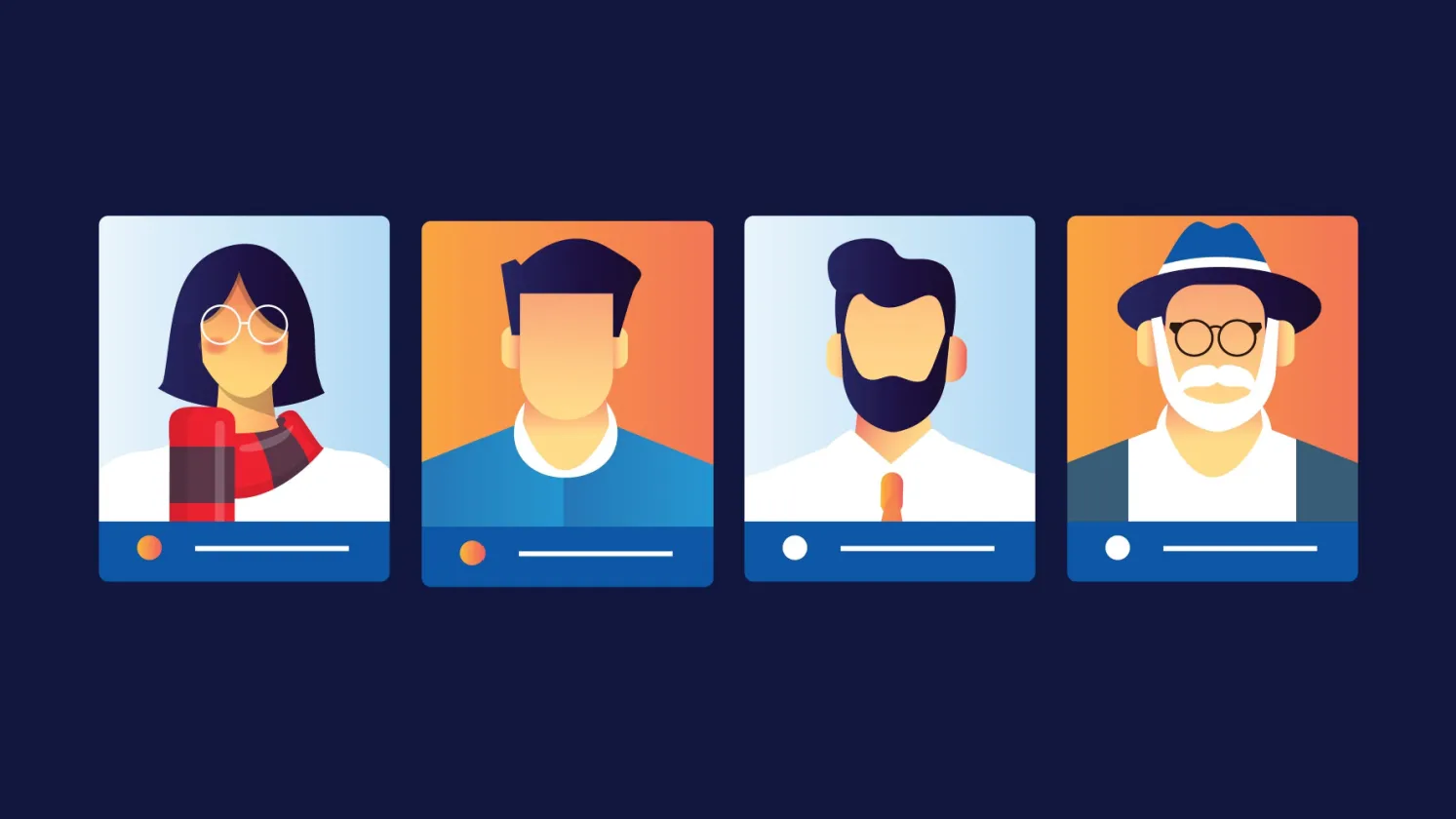
A buyer persona isn't just a demographic profile. It's not "women aged 25-45 in Sydney." A real buyer persona is a detailed, research-backed profile of your ideal customer that captures their goals, challenges, frustrations, values, and how they make decisions.
When you truly understand your customer at this level, everything shifts. Your content suddenly becomes relevant. Your messaging resonates. Your ads target the right people. Your sales conversations become more effective. Your entire business becomes more customer-centric.
This comprehensive guide walks you through exactly how to create powerful buyer personas for your business—from gathering the right research to using personas to transform your marketing results.
What Is a Buyer Persona? (It's Not What You Think)
Before we dive into how to create personas, let's make sure we're on the same page about what a buyer persona actually is.
A Buyer Persona Is NOT Just a Demographic Profile
A common mistake: confusing a demographic profile with a buyer persona.
A demographic profile says: "Women, aged 30-45, Melbourne, $80,000+ income, married with children."
That describes millions of people. It tells you almost nothing useful about their motivations or how to market to them.
A buyer persona goes infinitely deeper.
What a Buyer Persona Actually Is
A buyer persona is a semi-fictional, research-backed profile of your ideal customer that captures:
Who They Are:
- Demographics (age, location, income, education)
- Job title and industry (if B2B)
- Family and lifestyle details
How They Think:
- Values and beliefs
- Goals and aspirations
- Attitudes and mindsets
- What success looks like to them
What They Face:
- Pain points and frustrations
- Challenges and obstacles
- Problems they're trying to solve
- What keeps them up at night
How They Behave:
- Where they get information
- What platforms they use
- How they make purchasing decisions
- What influences them
- Common objections they have
Why They Buy:
- What motivates them
- What they're really looking for
- How your solution helps them
- What they value in a business
Why Personas Aren't Just for Big Companies
Many small business owners think: "Buyer personas are for companies with huge marketing teams. I don't have time for that."
This is backwards.
Buyer personas are actually MORE important for small businesses because:
✅ Limited resources: You can't afford to waste time and money on unfocused marketing. Personas help you focus on the right people.
✅ Competition: You're competing with bigger companies. Personas help you understand your niche better and serve them better than competitors.
✅ Personal connection: Small businesses win by creating genuine relationships. Personas help you understand your customers at a human level.
✅ Efficiency: With a small team, every marketing dollar matters. Personas ensure you're spending on activities that actually work.
Small businesses that use buyer personas outperform those that don't. It's not optional—it's essential.
Why Buyer Personas Are Your Marketing Superpower
Now let's talk about why creating buyer personas is worth the investment of your time.
#1: Personalization That Actually Connects
Research shows that personalized marketing performs significantly better than generic marketing.
When you understand your customer deeply, you can tailor every message, every piece of content, every ad to speak directly to them.
Without personas: "Check out our new course on digital marketing!"
With personas: "Struggling to find time for marketing while running your business? Our 20-minute lessons fit into your busy schedule—perfect for busy business owners who want results without the time commitment."
The second message is infinitely more compelling because it speaks to a specific person's specific problem.
This personalization leads to:
- Higher open rates on emails
- More clicks on ads
- Better conversion rates
- Stronger customer loyalty
- More repeat purchases
#2: Content That Resonates (Instead of Crickets)
Creating content is time-consuming. The last thing you want is to spend hours creating something that nobody reads or engages with.
With buyer personas, you know exactly what content to create.
You stop guessing. You know:
- What problems your customers are trying to solve
- What questions they're asking
- What information they need
- Where they're looking for answers
- What format they prefer (blog, video, podcast, etc.)
This means every piece of content you create has a purpose and an audience. It's not randomly hoping something sticks.
#3: Smarter Marketing Decisions
Without personas, you make marketing decisions based on gut feeling or what competitors are doing.
With personas, you make decisions based on where your actual customers are and what they actually respond to.
Channel Selection: Without personas: "Everyone's on TikTok, so we should be on TikTok." With personas: "Our ideal customer is a 35-year-old business owner who uses LinkedIn and email. TikTok isn't worth our time."
Advertising Targeting: Without personas: Running broad ads hoping someone clicks. With personas: Running highly targeted ads to people who match your ideal customer profile, reducing wasted ad spend.
Messaging: Without personas: Generic value propositions that could apply to anyone. With personas: Specific messaging that addresses each persona's unique pain points and goals.
#4: Better Sales and Customer Service
Personas aren't just for marketing. Your sales and customer service teams benefit too.
Sales conversations become more effective: Your sales team understands the prospect's likely challenges, goals, and objections before the conversation even starts. They can ask better questions and address real concerns.
Customer service becomes more empathetic: When you understand customer pain points, your support team can anticipate issues and provide more empathetic, effective help.
#5: Resource Efficiency
As a small business owner, your time and budget are limited. Personas ensure you're investing both wisely.
Instead of trying to market to everyone (and connecting with no one), you focus on your ideal customers. This means:
- Lower customer acquisition costs
- Higher conversion rates
- Better ROI on marketing spend
- Less wasted time and effort
One focused campaign that reaches the right people beats ten scattered campaigns reaching everyone.
The 5-Step Process to Create Powerful Buyer Personas
Now let's get practical. Here's exactly how to create buyer personas for your business.
Step 1: Gather Intelligence From Multiple Sources
The best personas are built on real data from multiple sources. You're looking for patterns and insights, not just guesses.
Mine Your Existing Data:
Google Analytics:
- What demographics are visiting your website?
- What pages do they spend the most time on?
- What content engages them most?
- Where are they coming from?
- What's their behavior flow?
Look for patterns. If you see that 60% of your website visitors are women aged 30-45 from Australia, that's a pattern. If you see that 80% of your readers stay on your "how to create digital marketing strategy" article for more than 5 minutes, that tells you something about what interests them.
CRM or Sales Records:
- Who is actually buying from you?
- What do your best customers have in common?
- What was the typical sales cycle?
- What questions did they ask?
- What convinced them to buy?
Website Behavior:
- Which blog posts get the most traffic?
- Which products/services sell best?
- Where are people abandoning (not converting)?
- What common themes do high-converting visitors share?
Actionable step: Spend 1-2 hours reviewing your Google Analytics, CRM, and sales records. Write down what you notice about your typical customer.
Ask Your Customers Directly:
The most valuable insights come straight from real customers.
Customer Interviews: Reach out to 5-10 of your best customers. Ask them:
- Why did you choose us over competitors?
- What problem were you trying to solve?
- How did you search for a solution?
- What was your biggest hesitation before buying?
- What results have you seen?
- Where do you typically go for information in our industry?
- What does success look like for you?
Surveys: Create a simple survey asking about:
- Their role/title
- Their biggest challenges
- Their goals
- How they found you
- What other solutions they considered
You don't need hundreds of responses. Even 10-20 responses reveal clear patterns.
Talk to Your Team:
Your sales and customer service teams talk to prospects and customers daily. They hear the real objections, questions, and frustrations.
Schedule a 30-minute session and ask:
- What are the most common questions you hear?
- What objections come up repeatedly in sales conversations?
- What language do customers use to describe their problems?
- What types of customers do you enjoy working with most?
- Are there customer types you find harder to serve?
- What patterns do you notice?
Research Your Market:
Look for:
- Industry reports and market research
- Competitor customer reviews (what are people saying?)
- Online forums and communities where your target audience hangs out
- Social media discussions and questions
- Reddit and Quora threads related to your industry
Actionable step: Identify 2-3 online communities where your target customers are active. Spend an hour observing conversations and noting common questions, problems, and language.
Step 2: Identify Patterns and Segments
As you gather information, patterns will emerge. Different groups of customers with different characteristics and needs.
Maybe you notice:
- Some customers are primarily concerned about cost
- Others prioritize quality and results
- Some are very technical
- Others are non-technical and want simplicity
- Some are in a specific industry
- Others span multiple industries
These patterns represent your different buyer personas.
Most small businesses have 2-4 core personas. Start with the most important.
Actionable step: Review all the data you've gathered and write down the 2-3 most distinct customer types or segments you serve.
Step 3: Build Your Persona Profiles
Now it's time to organize all this information into clear persona profiles.
Give Each Persona a Name and Face:
Names like "Entrepreneur Emma," "Corporate Chris," or "Startup Sam" make personas feel real and help your team refer to them easily.
Find a stock photo that represents the persona (this helps visualize them during discussions).
Write Their Story:
Create a brief narrative describing a typical day in their life, their role, their challenges, and their goals.
Example: "Emma is a busy small business owner juggling multiple responsibilities. She spends her mornings managing her team and afternoons focused on client work. Her biggest frustration is finding enough time for marketing while maintaining quality client service. Her main goal is to grow her client base without working 80-hour weeks."
Capture Key Information:
Organize the information you've gathered into clear sections:
Demographics:
- Age: 35-50
- Location: Major Australian cities
- Income: $80,000+
- Education: Bachelor's degree or higher
- Family: Married with children
Professional/Business Context (if B2B):
- Job title: Small business owner/entrepreneur
- Industry: Service-based (consulting, coaching, freelance)
- Company size: 1-10 employees
- Key responsibilities: Business development, client service, team management
Goals and Aspirations:
- Grow their business to $500k+ revenue
- Achieve work-life balance
- Build a sustainable business they can scale
- Have more time freedom
Challenges and Pain Points:
- Limited time for marketing (core business takes priority)
- Inconsistent lead generation
- Difficulty competing with larger companies
- Imposter syndrome/self-doubt
- Tech overwhelm (too many tools, too many options)
- Not knowing where to focus marketing efforts
Information Sources:
- LinkedIn (professional learning)
- Podcasts (consume during commute/workouts)
- Email newsletters (prefer condensed, actionable content)
- Blog posts (looking for practical, time-saving strategies)
- Online courses (prefer short, focused learning)
Buying Process:
- Researches extensively before buying
- Seeks recommendations from peers
- Values social proof (reviews, testimonials)
- Hesitant about courses/products she won't have time to implement
- Wants clear ROI and measurable results
- Budget: $500-2,000 per year for learning/tools
Common Objections:
- "I don't have time for another course"
- "How will I find time to implement this?"
- "Is this actually worth the investment?"
- "Can I trust this will work for my specific business?"
How We Help:
- 20-minute lessons fit into busy schedules
- Practical, immediately implementable strategies
- Clear ROI and measurable results
- Community support and accountability
- Affordable ($49/month)
Real Quotes (if available): "I just wish I had more hours in the day to get everything done." "I want to grow my business but I don't want to sacrifice my personal life to do it."
Actionable step: Create one detailed persona profile using the structure above. Don't worry about perfection—you can refine it later.
Step 4: Validate Your Personas
Before you start using your personas to guide all your marketing, make sure they're actually accurate.
Check Against Your Data: Do your personas match the data you've gathered? If your research shows your customers are primarily 45-55 but you created a persona who is 30, something's off.
Test With Your Team: Share your personas with your sales and customer service teams. Do they say, "Yes, this is definitely a customer type we serve"? Or do they say, "Hmm, I'm not sure this matches our customers"?
Refine Based on Feedback: Use their feedback to adjust your personas. Maybe you need to combine two personas. Maybe you need to add more detail. Maybe you realize you've missed an important customer segment entirely.
Actionable step: Share your persona with 2-3 team members and ask for honest feedback: "Does this match real customers you work with?"
Step 5: Put Your Personas to Work
This is where personas become powerful. You actually use them to guide your marketing and business decisions.
Use Personas to Guide Content Creation:
Before you create any content, ask: "Which persona is this for? What problem am I solving for them?"
Instead of: "Let me write about digital marketing best practices" Ask: "What does Emma need to know about digital marketing that will help her grow her business without working 80-hour weeks?"
This shift in thinking completely changes the content you create.
Tailor Your Messaging:
Review your website, emails, ads, and social media. Is your messaging tailored to your personas? Or is it generic?
Generic: "Learn digital marketing from industry experts" Tailored to Emma: "Learn digital marketing in 20-minute lessons designed for busy business owners who want to grow without sacrificing their personal life"
Choose Your Marketing Channels Wisely:
If your persona spends time on LinkedIn and email but not TikTok, focus there. Don't waste time on platforms your customers don't use.
Target Your Ads Precisely:
When running paid ads, use your persona's characteristics to target precisely. Don't just run broad ads hoping someone clicks.
Improve Your Sales Conversations:
Brief your sales team on the persona's common objections and concerns. Help them have more effective conversations.
Actionable step: Pick one marketing activity you're currently doing. How could you make it more specific to one of your personas? Make one change this week.
Buyer Personas in Action: Real Examples
Let's see how different businesses use personas to drive better marketing results.
Example 1: Digital Marketing Course (Like 20 Minute Marketing)
Primary Persona: Busy Entrepreneur Emma
How Personas Guide Their Marketing:
Content Strategy:
- Blog posts addressing Emma's time constraints: "Digital Marketing in 20 Minutes a Day"
- Email sequences focused on quick wins, not overwhelming theory
- Videos instead of long articles (she prefers visual learning)
- Topic selection: time-saving strategies, ROI-focused tactics
Messaging:
- Emphasis on "20-minute lessons" (addresses time constraint)
- Emphasis on results and ROI (she cares about measurable outcomes)
- Emphasis on simplicity (she wants actionable, not theoretical)
- Testimonials from busy business owners (social proof from her peer group)
Channel Focus:
- LinkedIn (where Emma networks professionally)
- Email marketing (her preferred communication channel)
- Blog/SEO (she searches for solutions)
- Facebook (she uses it personally and professionally)
- Not TikTok (Emma isn't there)
Ad Targeting:
- Targeting small business owners, entrepreneurs, 35-55 age range
- Interests: entrepreneurship, business growth, time management
- Geographic: Australian locations where target customers are
Result: Every piece of marketing speaks directly to Emma's needs, challenges, and preferences. Much higher conversion rates than generic marketing.
Example 2: Local Service Business (Plumbing)
Primary Persona: Homeowner Henry
How Personas Guide Their Marketing:
Content Strategy:
- Blog posts: "How to Fix Common Plumbing Problems" (DIY for minor issues, call for major)
- Social media: Tips on plumbing maintenance
- Videos: Common plumbing mistakes to avoid
- Focus: Educational content that builds trust and positions them as experts
Messaging:
- Emphasis on reliability and quick response ("We arrive on time, every time")
- Emphasis on transparent pricing ("No surprise charges")
- Emphasis on professional quality ("Licensed, insured, experienced")
- Customer testimonials from homeowners (his peer group)
Channel Focus:
- Google Local (Henry searches "plumber near me")
- Google Business Profile (critical for local search)
- Facebook (where Henry sees local business recommendations)
- Nextdoor (local neighborhood community)
- Not Instagram (Henry isn't browsing Instagram for plumbers)
Ad Targeting:
- Local geographic targeting (specific suburbs/postcodes)
- Interests: home improvement, DIY, homeownership
- Age: 35-65 (homeowner demographic)
Result: Marketing meets Henry where he's looking (local search) with messages he cares about (reliability, quality, fair pricing).
Example 3: E-Commerce Store (Eco-Friendly Products)
Primary Persona: Conscious Consumer Claire
How Personas Guide Their Marketing:
Content Strategy:
- Blog posts: "Why Eco-Friendly Products Matter", "How to Reduce Plastic Waste"
- Instagram: Beautiful lifestyle photos showing products in use
- Videos: Behind-the-scenes showing sustainable production
- Focus: Storytelling that aligns with values
Messaging:
- Emphasis on environmental impact ("Every purchase plants a tree")
- Emphasis on quality and longevity ("Built to last, not to waste")
- Emphasis on values alignment ("Support businesses doing good")
- User-generated content showing customers using products
Channel Focus:
- Instagram (where Claire finds inspiration and discovers brands)
- Pinterest (she saves ideas and products)
- Email (product recommendations aligned with her interests)
- Blog/SEO (she researches product impacts)
Ad Targeting:
- Interests: sustainability, environmental causes, eco-friendly living
- Demographics: Women 25-45, higher income, environmentally conscious
- Lookalike audiences (similar to existing customers)
Result: Marketing attracts people who share Claire's values, leading to higher customer lifetime value and loyalty.
Common Mistakes When Creating Personas (And How to Avoid Them)
As you create your personas, watch out for these common pitfalls.
Mistake #1: Relying on Assumptions Instead of Data
The problem: Creating personas based on what you think your customers are like, without validating with real research.
Result: Inaccurate personas that don't match reality.
How to avoid: Base every persona on real data from multiple sources (analytics, interviews, sales feedback, surveys). Treat your initial ideas as hypotheses to test with research.
Mistake #2: Making Personas Too Broad
The problem: Creating one persona that's supposed to represent all your customers.
Result: A generic persona that doesn't help guide specific marketing decisions.
How to avoid: Identify distinct customer segments. Create separate personas for each. Most businesses have 2-4 core personas.
Mistake #3: Focusing Only on Demographics
The problem: Creating personas based only on age, location, income, etc.
Result: Missing the psychographic and behavioral details that actually drive marketing decisions.
How to avoid: Go deep into goals, challenges, values, information sources, and buying behavior. These matter more than age.
Mistake #4: Creating Personas and Then Ignoring Them
The problem: Building beautiful persona documents, then never referring to them again.
Result: Personas are useless if you're not actually using them.
How to avoid: Make using personas a standard practice. Before creating content, running ads, or making marketing decisions, ask "Which persona is this for?"
Mistake #5: Never Updating Your Personas
The problem: Creating personas once and assuming they're still accurate two years later.
Result: Your personas become outdated as your customers' needs and preferences change.
How to avoid: Review and update your personas every 6-12 months. Gather fresh customer feedback. Check if your data has changed.
Mistake #6: Not Sharing Personas Across Your Team
The problem: Only the marketing team knows about the personas.
Result: Sales, customer service, and product teams make decisions without understanding your ideal customer.
How to avoid: Share persona profiles with your entire team. Conduct training sessions. Make personas easily accessible. Encourage everyone to refer to them.
The Secret Power of Personas: Building Empathy
Here's something most people don't talk about when discussing buyer personas:
Personas are empathy builders.
When your entire team understands your customers as real people—with specific challenges, frustrations, and goals—something shifts.
Your customer service becomes more empathetic. Your sales conversations become more genuine. Your product development becomes more customer-focused. Your business culture becomes more human-centered.
This empathy is powerful because it:
✅ Improves customer service - Your team genuinely cares about solving customer problems
✅ Enhances sales effectiveness - Sales conversations feel like genuine conversations, not pitches
✅ Drives product decisions - You develop products that actually solve real problems
✅ Creates customer loyalty - Customers feel understood and valued
✅ Attracts better employees - People want to work for purpose-driven companies
The best companies don't just use personas for marketing. They use personas to build a culture of empathy throughout their entire organization.
Share persona narratives with your team. Reference them in meetings. Encourage decisions that prioritize the persona's needs. Make it part of your company culture.
When everyone in your business can empathize with your ideal customer, it transforms everything.
Explore Related Content: Master Your Entire Customer Strategy
Creating buyer personas is foundational. But there's so much more to learn about understanding and serving your customers effectively.
Check out these related resources to deepen your knowledge:
Understand How Customers Make Decisions:
- Customer Journey Digital Marketing - Learn how customers move through their buying process and where to meet them
Build Your Complete Digital Marketing Foundation:
- Digital Marketing Funnel for Small Business - Understand how the digital funnel works differently from traditional funnels
- Digital Marketing for Small Business - The foundational guide to all digital marketing channels
Choose Comprehensive Training to Master All This:
- Best Digital Marketing Courses 2026: Complete Comparison - Compare top courses for comprehensive training
- Best Digital Marketing Courses for Small Business 2026 - Courses designed specifically for small business owners
- How to Evaluate Digital Marketing Courses - Use our framework to choose the right course
- Digital Marketing Course ROI Calculator - Calculate the investment and return
These resources will help you move from understanding buyer personas to implementing a complete customer-centric marketing strategy.
Your Complete 100-Lesson Learning Path
Creating effective buyer personas is just one piece of becoming truly customer-centric in your marketing and business.
Our 20 Minute Marketing course is structured as a complete 100-lesson program that covers everything:
Lessons 1-15: Understanding Your Customer Foundation
- Creating detailed buyer personas (where you are now)
- Understanding customer behavior and psychology
- Mapping customer journeys
- Identifying target markets
- Setting up your digital foundation
Lessons 16-35: Content Marketing and SEO
- Creating content strategy based on personas
- SEO and organic search
- Blog strategy
- Video content
- Social media content
Lessons 36-55: Email and Direct Communication
- Email marketing strategy
- Building email lists
- Segmentation using personas
- Email campaigns
- Automation and sequences
Lessons 56-75: Paid Advertising and Optimization
- Using personas for ad targeting
- Google Ads
- Facebook and Instagram ads
- Conversion optimization
- Testing and optimization
Lessons 76-90: Building Loyalty and Advocacy
- Customer retention strategies
- Building community
- Referral programs
- Reputation management
- Using personas for customer service
Lessons 91-100: Integration and Scaling
- Putting it all together
- Building a complete marketing system
- Scaling your business
- Measuring ROI
- Continuous improvement
This structured approach ensures you don't just understand buyer personas—you understand how to use them throughout your entire digital marketing strategy to drive real business growth.
Your Next Step: Start Creating Your Personas Today
You now understand:
✅ What buyer personas actually are (and aren't) ✅ Why they're essential for your business ✅ Exactly how to research and create them ✅ How to use them to transform your marketing ✅ How they build empathy throughout your organization
The question now is: Will you take action?
Many business owners understand the importance of buyer personas but never actually create them. They stay stuck marketing to a ghost instead of a real person.
Don't be that business owner.
This week, commit to:
- Reviewing your customer data and identifying patterns
- Interviewing 2-3 of your best customers
- Creating your first buyer persona profile
- Sharing it with your team
- Using it to guide one marketing decision
That's it. Small steps that will transform your marketing.
Take Your Persona Work to the Next Level
If you're serious about building a truly customer-centric business and mastering how to use personas throughout your entire marketing strategy, the next step is comprehensive, structured training.
Our 20 Minute Marketing course includes an entire module dedicated to buyer personas:
✅ 100 lessons covering everything from persona creation to using them in every aspect of your business
✅ Practical, hands-on training (not just theory)
✅ Real buyer persona templates you can use immediately
✅ Self-paced learning in 20-minute lessons (fits your busy schedule)
✅ Active community of business owners for feedback and accountability
✅ Direct support when you get stuck
✅ Affordable at just $49/month (ROI positive within weeks)
The course covers:
- How to research and create detailed buyer personas
- How to use personas to guide content creation
- How to use personas for email marketing and segmentation
- How to use personas for paid advertising targeting
- How to use personas to improve sales and customer service
- How to maintain and evolve your personas over time
- And much more
Whether you're creating your first persona or looking to refine your existing personas, this course will give you the knowledge and tools to do it effectively.
Start Your Buyer Persona Mastery Today - Join 20 Minute Marketing
$49/month. Self-paced. Complete training on buyer personas and everything else in digital marketing. Designed for small business owners who want to truly understand their customers.
Buyer personas are the foundation of effective marketing. Master them, and everything else becomes easier and more effective.
You'll never need a Marketing Agency again!
Digital Marketing Courses that teach you more than an Agency ever could (or would!)