The Marketing Funnel Explained (for People Who Hate Jargon)
Aug 24, 2026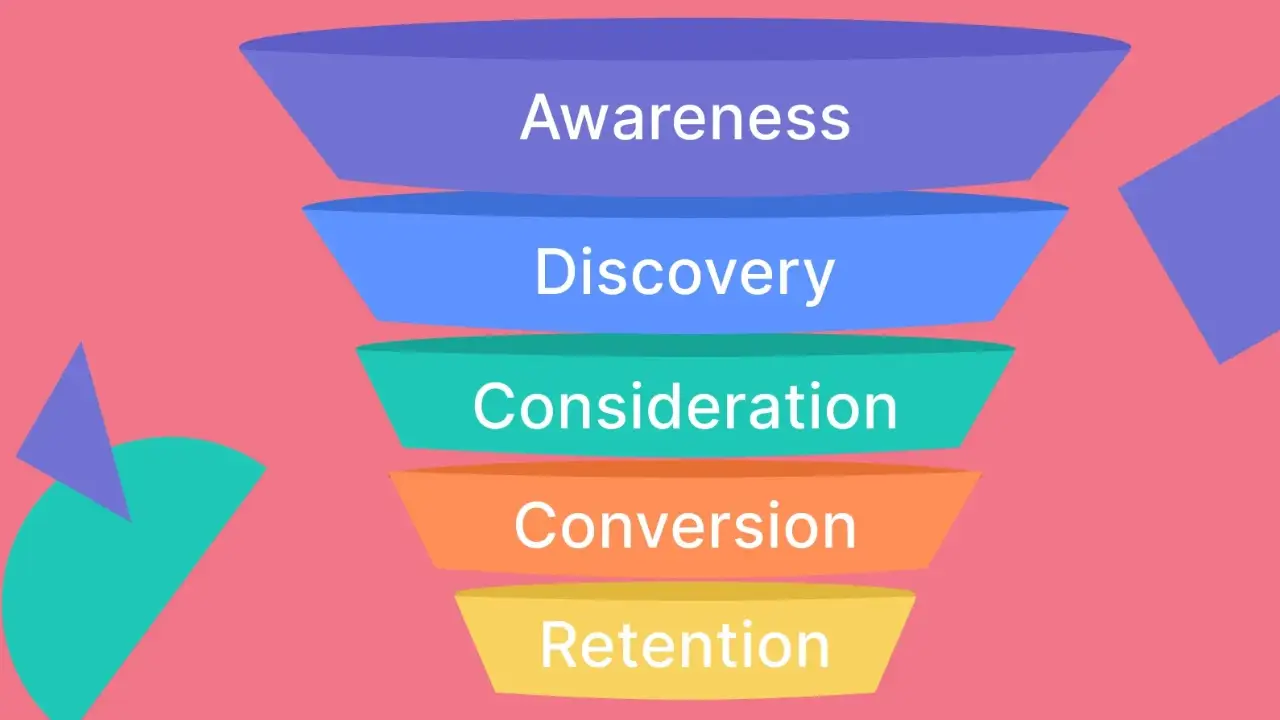
The Marketing Funnel Explained (for People Who Hate Jargon)
A marketing funnel maps the buyer journey from initial discovery to repeat conversion. The core stages are Awareness (discovery), Interest (evaluation), Decision (comparison), and Action (purchase). High-performing marketing aligns specific content and value propositions to each stage rather than demanding an immediate sale from cold prospects.
The term "marketing funnel" is often buried under industry buzzwords, but the core concept is straightforward: it maps the progression of a prospective customer from initial brand discovery through to a transaction. Understanding this progression prevents the common mistake of pitching a sale before establishing trust.
The 4 Core Stages Demystified
1. Awareness (Top of Funnel - TOFU) Discovery
A prospective customer learns your business exists via a search query, social media post, local directory, or word-of-mouth referral.
Focus: Educational content, search visibility, and brand exposure.
2. Interest (Middle of Funnel - MOFU) Evaluation
The prospect evaluates your capabilities by exploring your website, reading customer reviews, or reviewing service details to determine fit.
Focus: Clear website messaging, case studies, and helpful guides.
3. Decision (Middle to Bottom) Comparison
The prospect actively compares your offering against alternatives, weighing factors such as pricing, trust indicators, guarantees, and ease of engagement.
Focus: Social proof, direct offers, clear pricing, and risk reduction.
4. Action (Bottom of Funnel - BOFU) Conversion
The prospect completes the purchase, submits an inquiry form, or books a service consultation.
Focus: Frictionless checkout, simple booking forms, and immediate confirmation.
The model uses a tapering funnel shape because audience size naturally decreases at each successive stage. Large groups discover your brand, but only qualified prospects move through evaluation to purchase.
Content and Channel Strategy per Stage
To maximize conversions across the funnel, deploy assets tailored to user intent:
- Awareness Assets: Educational blog posts, search engine optimization (SEO), local directory profiles, and short-form video content.
- Interest Assets: Comprehensive service pages, downloadable resources, detailed FAQ sections, and email newsletters.
- Decision Assets: Client testimonials, direct comparison guides, clear pricing structures, and risk-free trial or consultation offers.
- Action Assets: Streamlined booking forms, clear call-to-action (CTA) buttons, and fast site performance.
Stage 5: Advocacy (The Post-Purchase Engine)
The funnel process does not terminate at the transaction. The post-purchase stage—Advocacy—focuses on customer retention and expansion. Satisfied clients who write positive reviews, return for repeat orders, and refer new clients generate sustainable growth with minimal acquisition cost. Systematic follow-ups, review requests, and exceptional customer service turn single transactions into recurring value.
Frequently Asked Questions
What is a marketing funnel?
A marketing funnel is a conceptual framework tracking the end-to-end customer journey from initial brand awareness to direct conversion and advocacy.
What are the standard stages of a marketing funnel?
The foundational stages are Awareness (discovery), Interest (evaluation), Decision (comparison), and Action (conversion), followed by Advocacy (retention and referrals).
Why do some advertising campaigns fail to generate conversions?
Campaigns frequently underperform when ad messaging demands an immediate buying action from cold prospects who have not passed through the evaluation and trust-building stages.
Which funnel stage yields the highest marketing ROI?
The Advocacy stage often provides the highest return on investment. Retaining existing customers and encouraging referrals requires significantly lower capital than acquiring new top-of-funnel prospects.
Master Marketing Strategy in 20 Minutes
Our digital marketing short courses teach you how to build funnels that convert, optimise every customer touchpoint and scale step by step, skills you can use in a marketing role or for clients.
Browse short coursesLearn digital marketing in 20 minutes a day
Self-paced courses from someone who runs digital for two national brands. Build skills you can show an employer or a client.